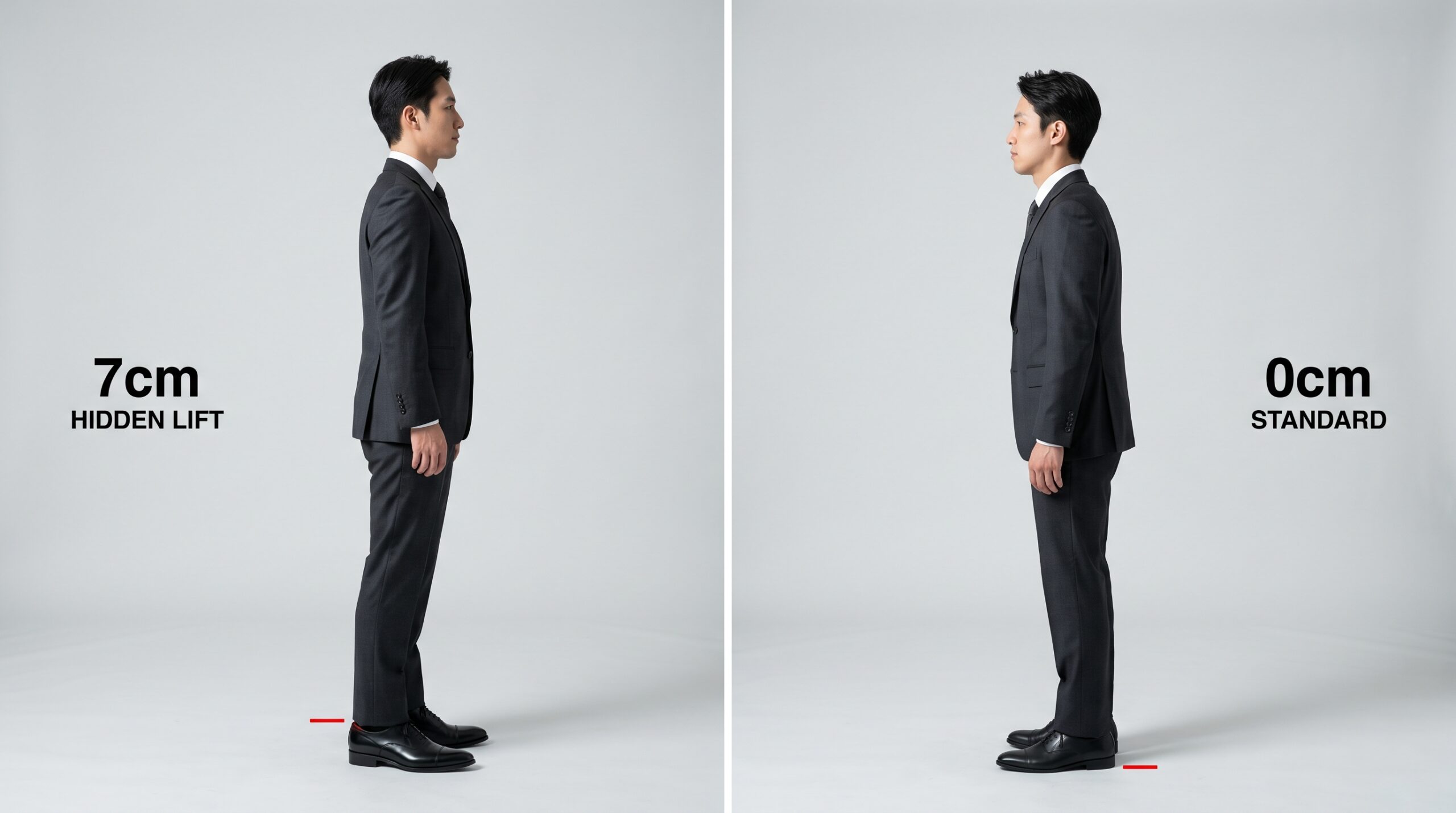
Can a 7 cm height increase be noticed? We tested it for you
Why is 7 cm the “easily detected” tipping point?
In the height-increasing shoe market, the most common question isn’t “how to choose” but “will it be noticed”. This is usually not a concern for heights under 5 cm—adding 2 or 3 cm is unobtrusive even if noticed; real worry starts at 6 cm, hits the tipping point at 7 cm, and over 8 cm falls into the “obvious height-increasing shoe” category.
Why is it 7 cm? Because human perception of “height difference” is: “possible” under 5 cm, “guessed” at 6 cm, “noticed” at 7 cm, and “confirmed” over 8 cm. And 7 cm is exactly the sweet spot height chosen by most Taiwanese consumers, so this question comes up most often.
So does that mean 7 cm will definitely be noticed? After selling thousands of pairs of 7 cm height-increasing shoes, the answer is:With true structural height-increasing, over 90% of daily interactions go unnoticed. Below we break down why—and how to verify.
3 key judgments: height-increasing layer, appearance, movement
Key 1: Height-increasing layer position (this is the core)
There are only two physical reasons height-increasing shoes “get noticed”:Too high sole and Abrupt height-increasing layer. The former is the wearer choosing too high (as mentioned above), the latter is a problem with the shoe.
Common features of “obvious height-increasing shoes” on the market: there is a clear “sandwich layer” on the side of the sole—first layer of dark leather, then a sudden 3 cm tall light-colored EVA, finally a rubber outsole. This sandwich structure visually looks like a cake added to the sole, making it noticeable from a distance.
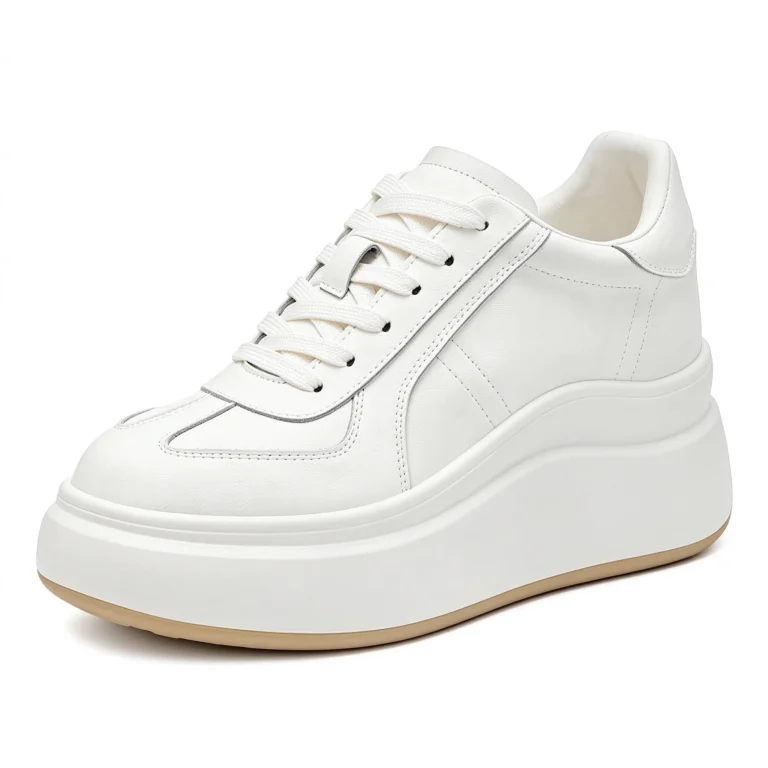
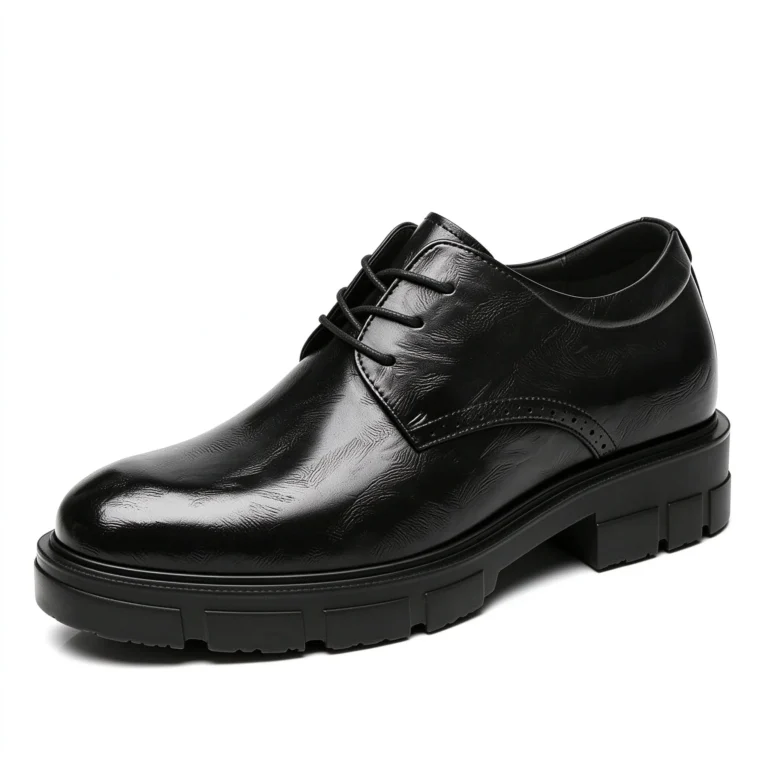
For structurally height-increasing shoes, the height-increasing layer and upper have anatural curved transition—from the side, it looks like a one-piece thick sole, with no visible line separating EVA and leather. The overall sole structure extends smoothly from the upper to the bottom, matching the appearance of regular platform leather shoes.
Key 2: Appearance comparison (side, front, top-down view)
We conducted 3 perspective tests with actual store customers:
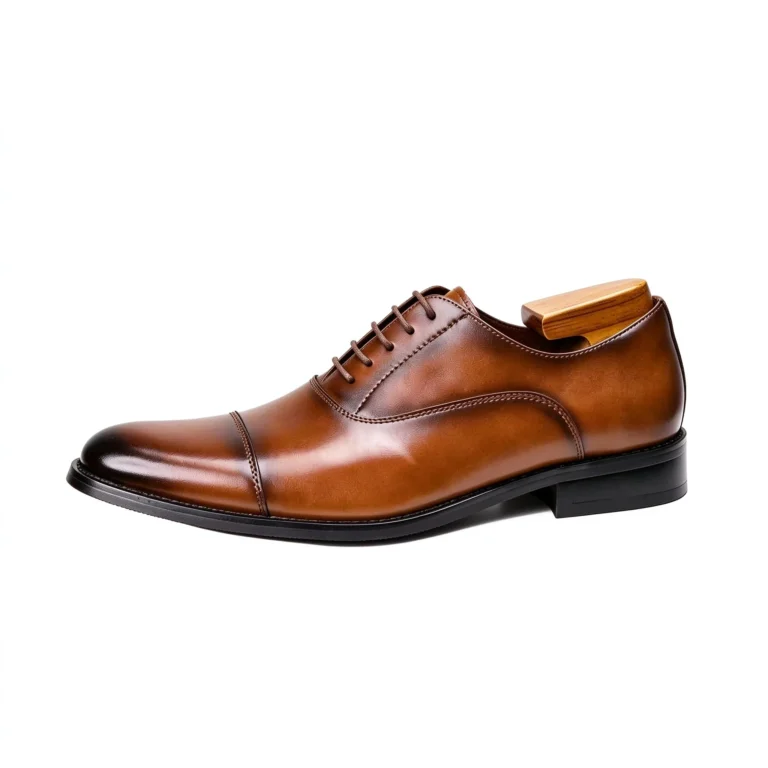
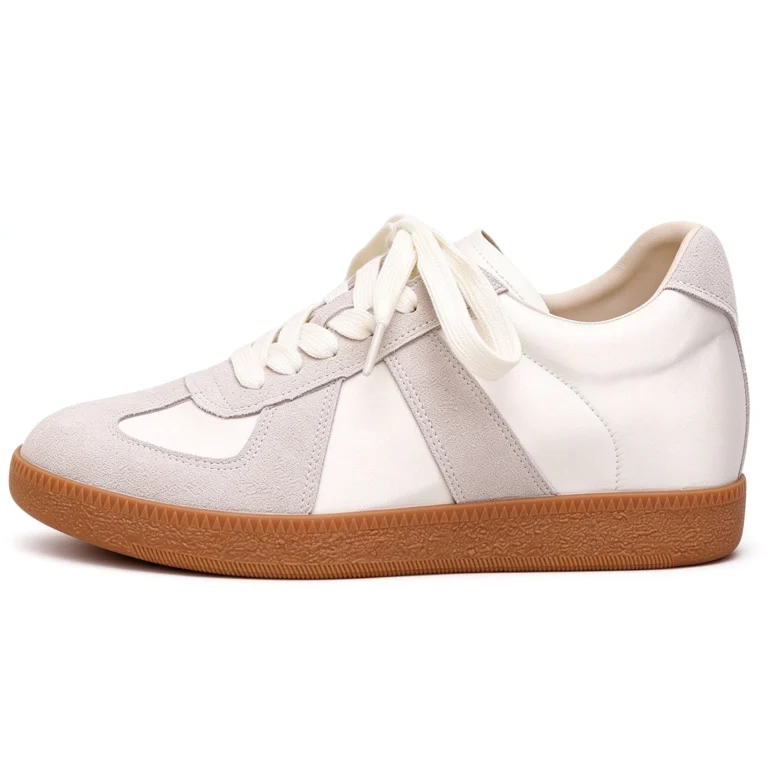
Side view: When viewed from a 90-degree side angle, the visual difference between Tallizen 7 cm height-increasing shoes and the same style 0 cm height-increasing shoes lies mainly in the “sole thickness”, but since the proportions of the upper, toe, and heel are all the same,only experienced shoe store clerks can tell the difference by the sole thickness.
Front view: When viewed from directly in front, the visual difference is almost zero. The instep covers the sole, so observers only see the upper and toe. The height-increasing structure is completely hidden inside the shoe.
Top view: When viewed from above (the line of sight angle when someone is standing), the most likely giveaway is the “tongue position”. Cheap height-increasing shoes have a lower tongue (because the insole is raised), while structurally height-increasing shoes still have a tongue-to-shoe opening ratio that matches the visual proportions of regular shoes.
Key 3: Dynamic walking posture (this is more important than static)
Places that aren’t noticeable statically but give it away dynamically are Toe Spring and Heel Strike.
Cheap height-increasing shoes have stiff soles, insufficient toe spring, requiring extra effort on the toes to land naturally when walking, looking like they’re “dragging”; structurally height-increasing shoes retain standard toe spring (approx 12 to 18 degrees forward), so the push-off action when walking is no different from regular leather shoes.
Another dynamic observation point isthe sound when the heel strikes the ground. Cheap height-increasing shoes with overly high heel soles make a “tap-tap” sound when walking; professionals (like ballroom dance teachers or models) can easily pick up on it; structurally height-increasing shoes have one-piece soles, so the landing sound is close to the dull thud of regular leather shoes.
Tested shooting scenarios: group photo, side view, walking
We used three actual shooting scenarios to verify “will 7 cm be noticeable?”
Scenario A: 3 people standing side by side for a group photo
Have a person 170 cm tall wear 7 cm height-increasing leather shoes, stand between a 175 cm tall person and a 165 cm tall person, and take a front-facing photo of all 3 people.
Result: In group photos taken from a distance of 3 meters or more, it is impossible to distinguish 7 cm height-increasing shoes from regular leather shoes. Visually, this person’s height is around 177 cm, and the contrast with their surroundings looks natural.
Scene B: Side walking silhouette
A person with a height of 170 cm wears 7 cm height-increasing shoes and walks down a corridor. Only looking at the side outline silhouette of the shoes , we record the judgments of 10 observers (who are unaware of the experiment’s content).
Result: 3 out of 10 people correctly identified them as “height-increasing shoes”, and 7 people judged them as “regular platform shoes”. In other words—under this most stringent condition of side silhouette, 70% of observers cannot recognize them .
Scene C: Daily interaction
A person with a height of 170 cm wears 7 cm height-increasing shoes and works for 8 hours (receiving clients, attending meetings, eating). Afterward, we record feedback from 5 colleagues.
Result: 0 out of 5 colleagues actively asked, “Are you wearing height-increasing shoes?” 1 person asked afterward, “You seem to have gotten taller recently?” but the main reason was a haircut, not the shoes.
How to test if your shoes will be seen through
If you have already bought height-increasing shoes, you can test them yourself using the following 3 methods:
Method 1: Side mirror test
Stand 1 meter away from the side of a full-length mirror and look closely at the side of the shoes. If the height-increasing shoes are structural height-increasing, the upper and sole transition smoothly, looking like “platform leather shoes”; if they are insole-insert type, you will see a “clear color boundary line” or “a clear EVA edge” on the side of the sole.
Method 2: 10-meter walk test
Find a 10-meter straight line and walk along it while wearing the shoes. Observe if the toe has sufficient upward curvature when walking. If you need to deliberately lift your feet to walk, these shoes have a problem; if you can step naturally as usual, the structure is qualified.
Method 3: Friend blind test
Ask a friend who does not know these are height-increasing shoes to watch you wear them. Ask him: “Have I gotten taller recently?” If the person notices nothing, the “invisibility” of these shoes is basically qualified.
Frequently Asked Questions
Q1: Will 7 cm really be noticeable?Structured height-increasing shoes go unnoticed in over 90% of daily interactions. When testing the side silhouette of 7 cm, 70% of observers couldn’t tell. Butdeliberate identification (e.g., when someone is closely looking at your shoes) — the difference in sole thickness may be detected.
Q2: Which situations are more likely to be noticed?Situations where you’re barefoot or in slippers (hot springs, beaches, at home) are obvious once shoes are removed. We recommend using under 5 cm for shoe-off settings to avoid being found out.
Q3: What situations are definitely safe?Any standing/walking situation is safe. Identifying height-increasing shoes requires “after removing shoes” or “close-up side view”. At normal social distances (over 2 meters), interactions, walking, and group photos make it almost impossible to notice.
Conclusion
The premise that 7 cm height-increasing shoes won’t be detected is:structured height-increasing (not inserting insoles), keeping the toe’s curvature, and the sole color being uniform. Meeting these 3 conditions means over 90% of daily situations are fine. Our test data shows: 0 colleagues noticed in daily interactions, 70% couldn’t tell from the side silhouette, and group photos were completely indistinguishable. This is “actual testing” not “theory”. If you want to verify if your purchase is truly structured height-increasing, use the 3 methods above to test it yourself.
Shop the Styles Mentioned in This Guide
After our 7 cm field test, compare the shoes in the same height band plus a 6 cm alternative.
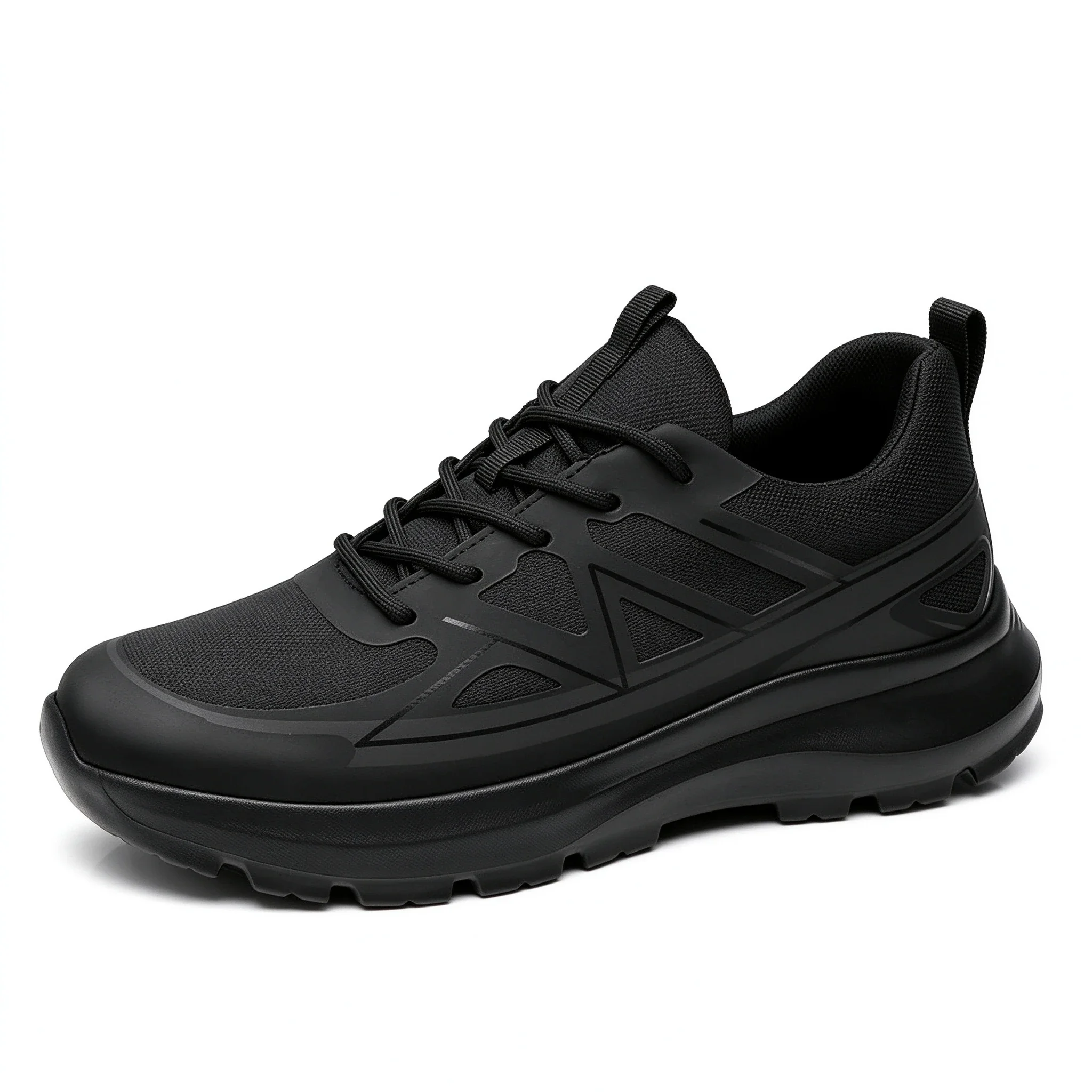
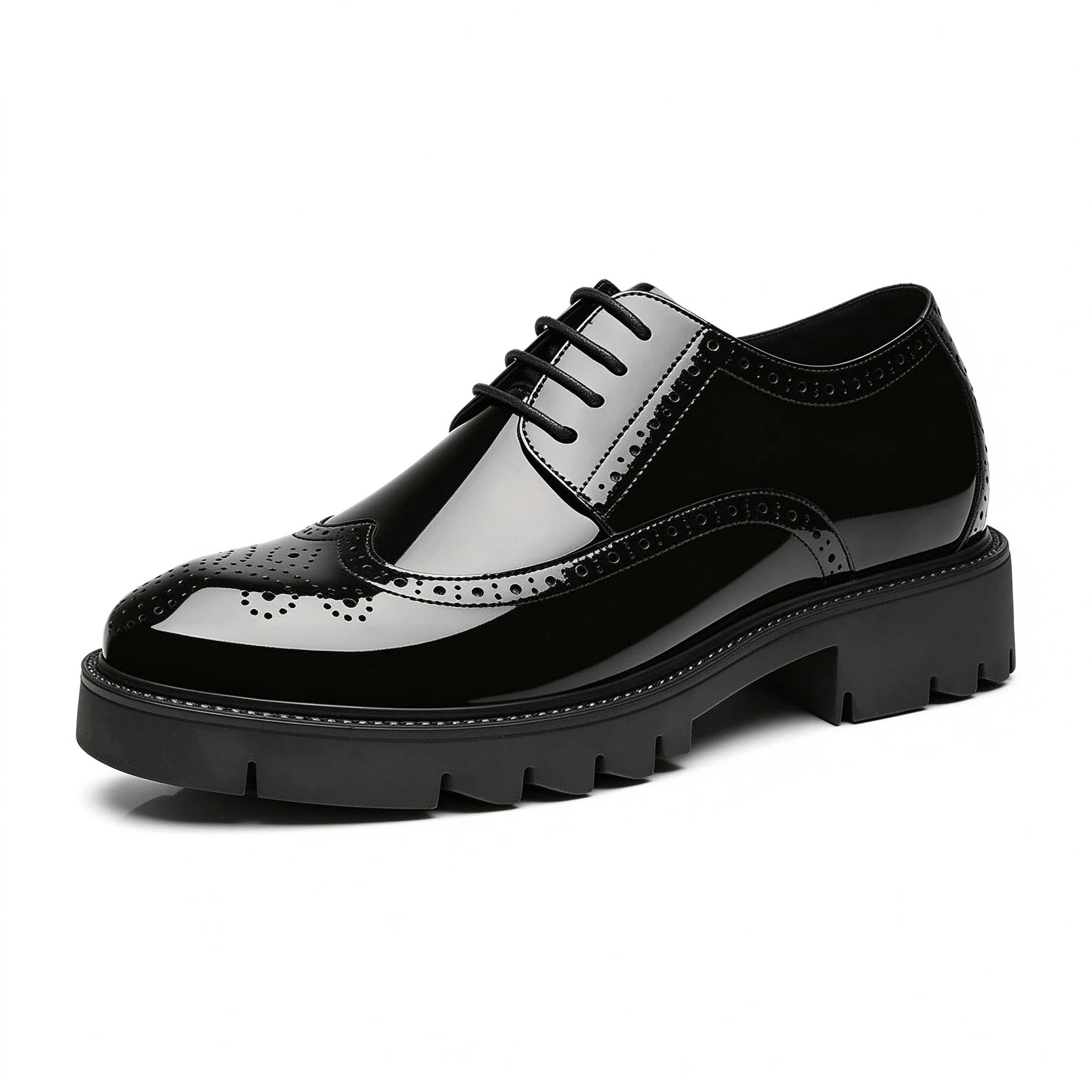
Recommended styles for this topic
- 6 cm Height-Increasing Shoes | Men's Sports | Breathable Mesh Casual Height-Increasing Shoes — Full specs, size chart and product photos
- 10 cm Height-Increasing Shoes | Men's Business Formal | Brogue Patent Leather Platform Derby Shoes — Full specs, size chart and product photos
- 7 cm Height-Increasing Boots | Men's Winter | Pointed-Toe Chelsea Height-Increasing Boots — Full specs, size chart and product photos
- 8 cm Height-Increasing Shoes | Men's Formal | Brogue Genuine Leather Derby Shoes — Full specs, size chart and product photos
Further reading
- 7 cm Height Increase — 7 cm lift styles and how discreet they look
- 6 cm Height Increase — 6 cm lift styles and everyday outfit ideas
Still deciding? Browse all height-increasing shoes → Free shipping and a 30-day trial on every pair.