Men’s Height-Increasing Outfits: The Visual Magic of Turning 170 into 180
Why even 170 cm guys want to look like they’re 180 cm?
Height is an unspoken rule in Asian culture: too-short guys face limited clothing choices, are often underestimated in job interviews, and lose confidence before even approaching someone they like. A visual height of 180 cm is the “comfort threshold” for most men in Taiwan. So the desire to go from 170 cm to 180 cm isn’t vanity—it’s a social reality.
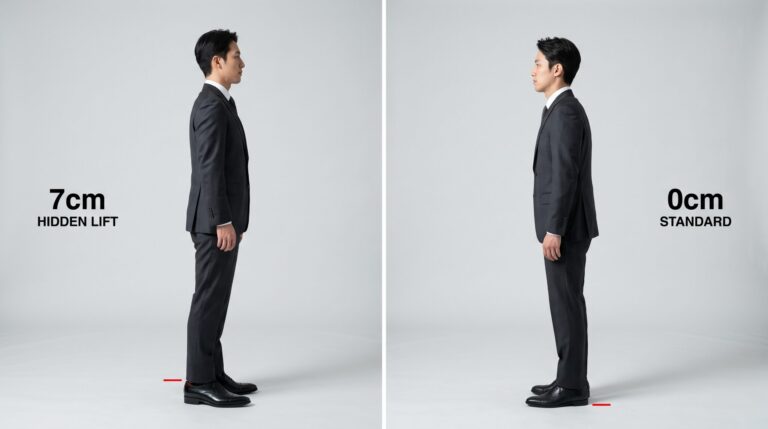
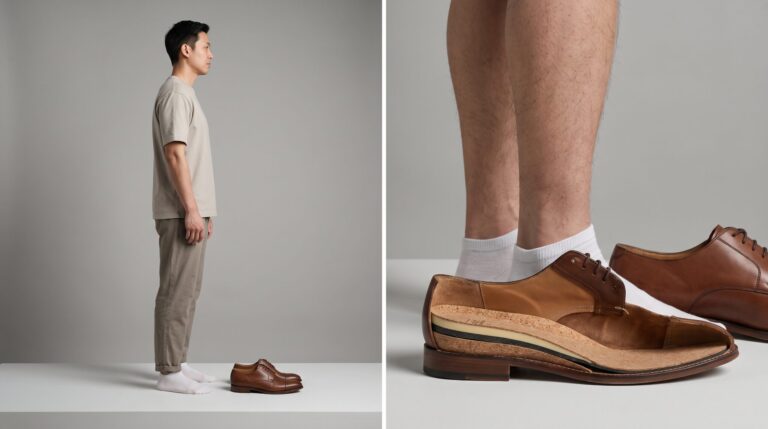
Height-increasing shoes aren’t the only solution. Let’s be clear: styling tricks can add 2 to 5 cm of visual height, plus 7 cm from structural height-increasing shoes, and the overall look can reach near 180 cm visually. We’ll break down the full styling below.
First trick: The 9-inch pant rule
Why do ankle-length pants make you look taller than full-length pants?
The core principle of looking taller is making your lower body appear longer. If your pant length hits right at the top of your shoe (near the tongue), it creates a continuous leg line, giving a V-shaped elongated look. If pants are too long and bunch at the ankle, they cut off the leg line, making it look like your legs are shortened.
ankle-length pants also expose your ankles directly. The ankle is the thinnest part of the leg, so exposing it creates a “visual focal point”—attention goes to the ankle, then extends upward, making legs look longer visually.
When to wear ankle-length pants
For business occasions, you can choose slim-fit 9-inch dress pants, paired with 8 cm formal height-increasing shoes—this ratio looks neat and polished for formal events.
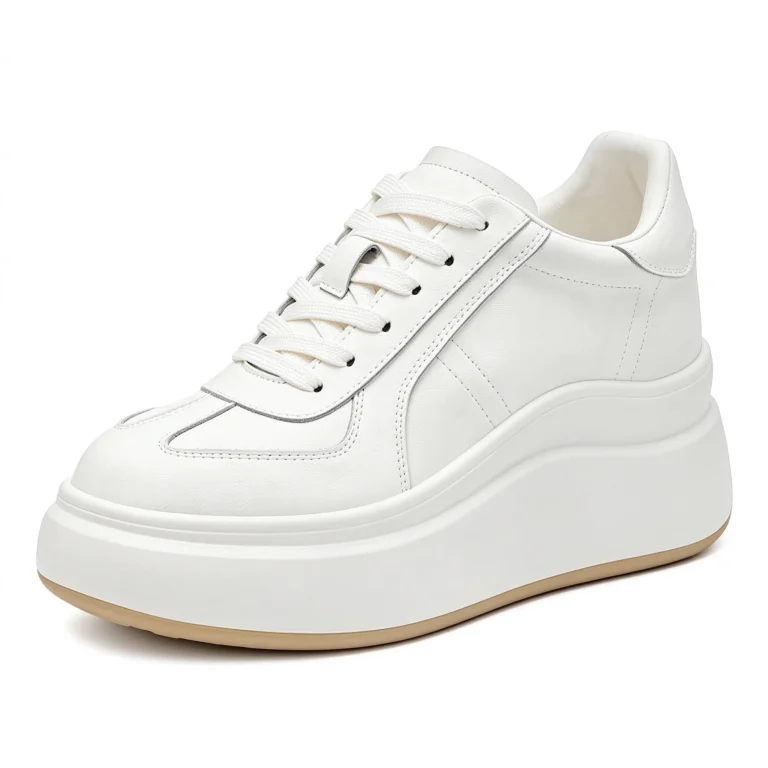
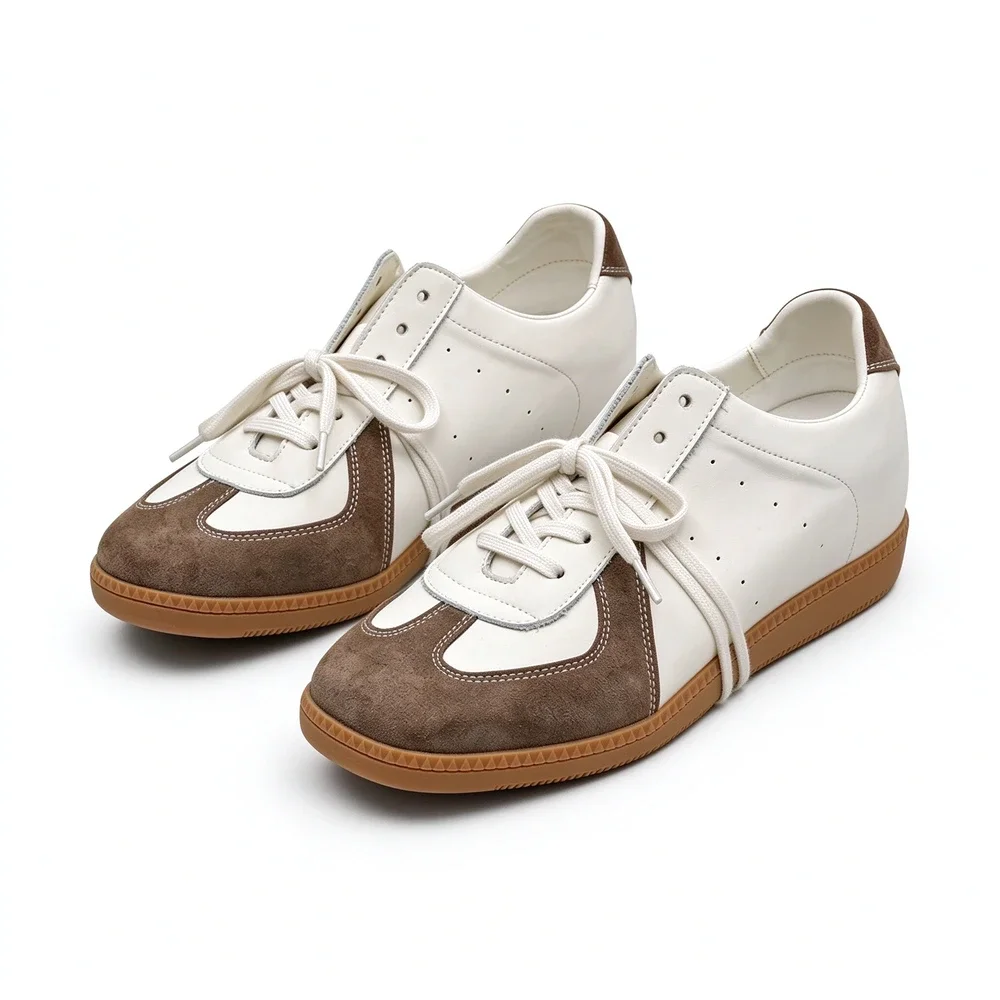
For casual occasions, you can choose slim-fit 9-inch jeans or khaki pants, paired with 7 cm German trainer height-increasing shoes, giving a street-style vibe without being too formal.
Pant material and color
Upper body effect: If your pants are darker or the same color as your shoes, the leg line will extend more visually. For example, black dress pants with dark brown derby shoes, or dark blue jeans with black German trainers. Never pair light pants with dark shoes (this cuts off the leg line at the ankle).
Second trick: Proportionate upper body fit
“Fit” doesn’t mean “tight”
Many short guys mistakenly think “wearing looser clothes makes you look less short”—this is the exact opposite of the truth. Loose upper body clothes will make your upper body look bulkier, making your upper body larger proportionally, while your lower body looks shorter, making your overall height look lower.
A fitted ( slim fit, not tight) top will make your torso look slimmer, visually elongating your upper body. Common fitted cuts:
- Shirt shoulder lines exactly cover the shoulder joints
- When arms hang naturally, cuffs hit the protruding wrist bone
- Abdominal fabric fits naturally, no obvious wrinkles
Key top length
The length of the top hem is very important: Shirt hem exactly covers the belt buckle, T-shirt hem is within 5 cm below the waistband. If the top is too long, it will lower your waistline, making legs look shorter; if the top is too short (exposing your belly button), it will raise your waistline too much, breaking the proportion.
Outerwear selection
Suit jackets and coats are height-boosting tools:
- Single-breasted suits look taller than double-breasted suits (single-breasted has a higher waistline)
- Single-row buttons look taller than double-row buttons (double-row buttons visually widen horizontally)
- Leave the last button unbuttoned (follow the traditional rule of not buttoning the last one, which visually exposes the waistline)
Third trick: Monochromatic color scheme
Monochromatic colors are the strongest tool for visual elongation
Color Psychology: The visual system perceives elements of the ‘same color family’ as a continuous line, while ‘contrasting colors’ are seen as a break. Outfits in the same color family create a visual straight line for your entire body proportion, making your height appear the longest.
Classic Same Color Family Combinations
- Black + Black: Black suit, black pants, black shoes — the strongest visual lengthening effect, perfect for business occasions
- Gray Scale: Dark gray suit, medium gray pants, white dress shirt, gray shoes — softer than black, with the same visual lengthening effect
- Dark Blue Monochrome: Dark blue suit pants, light blue dress shirt, dark brown shoes — visual lengthening without looking rigid
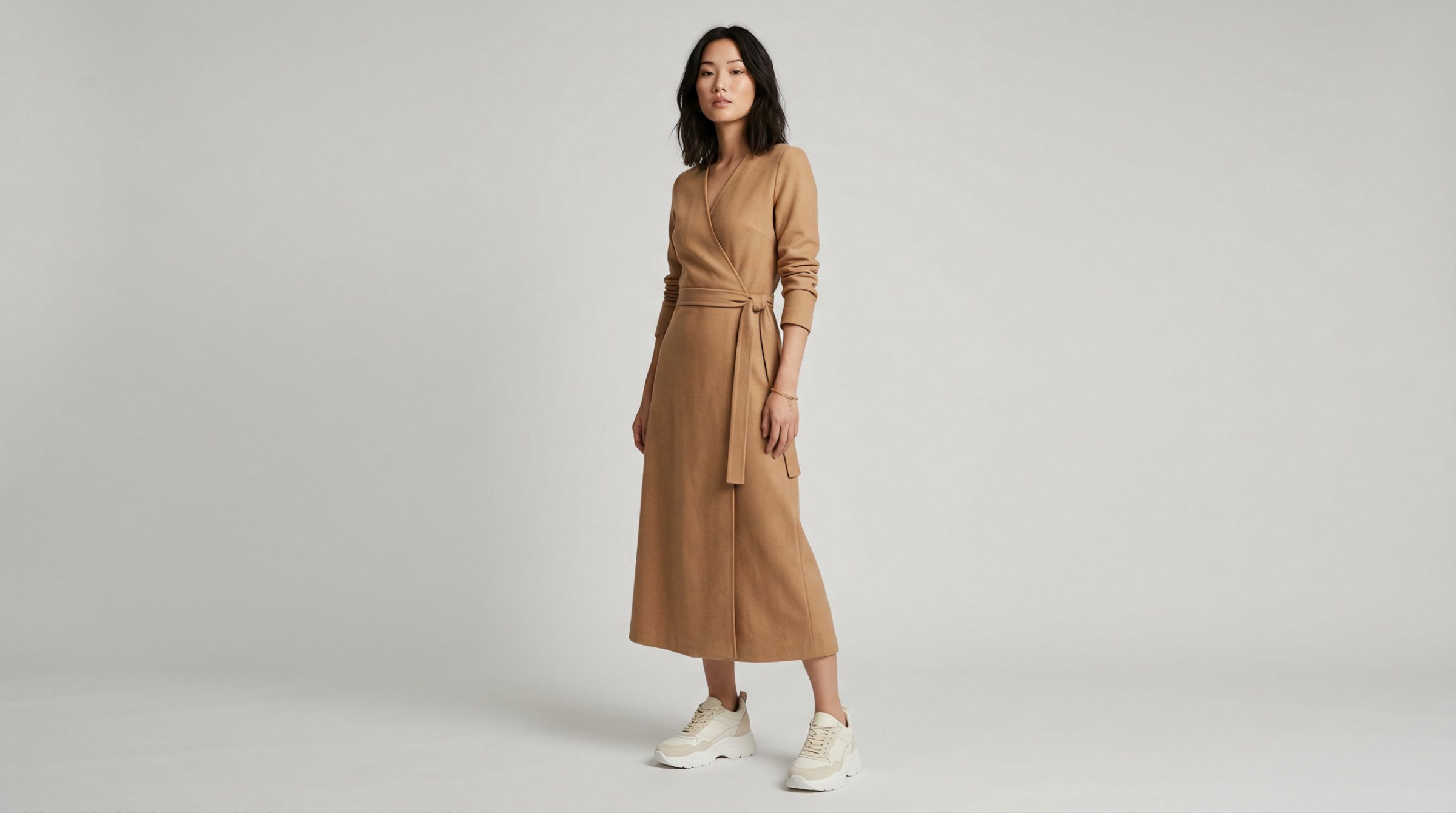
- All-Beige Outfit: Beige suit, beige pants, white dress shirt, brown shoes — commonly used by Korean guys around 170 cm, but needs height support to pull off
Contrasting Color Combinations to Avoid
A contrasting color combination where the top is dark, pants are light, and shoes are dark will cut the visual line at the waist, resulting in poor proportion. Common mistakes:
- Dark blue suit + light khaki pants (line breaks at the waist)
- White dress shirt + red belt (waistline is emphasized, reducing lower body proportion)
- White pants + dark shoes (ankle is cut off by dark shoes)
Fourth Tip: Visual Adjustments with Accessories
Bag Placement
The higher you carry a crossbody bag, the better — a bag at thigh height will cut the lower body’s visual line, while a bag near the waist (adjust a backpack or single-shoulder bag to waist level) is a core styling trick.
Hats and Hairstyles
Many short guys avoid wearing hats (afraid it will make them look shorter) — this is a misunderstanding. In fact, adding 2-3 cm of height above the hat, if you choose the right hat style, will actually lengthen your overall proportion. Recommendations:
- Bucket hat: narrow brim, adds height without widening
- Short-brim baseball cap: brim length under 7 cm (too long will actually make you look shorter)
- Avoid: Wide-brim bucket hats, overly flat-top beanies
For hairstyles, don’t make the top of your head too puffy, but don’t let the sides be too flat either — a structured silhouette will make your head’s visual proportion more balanced. Short fade or side-part styles look taller than a buzz cut.
Fifth Tip: Visual Selection of Height-Increasing Shoes
After mastering all outfit tips, pairing with structured height-increasing shoes will be the deciding factor. The logic for choosing visually lengthening shoes:
Toe Shape
Pointed toe > square toe > round toe. Pointed toes have the strongest visual lengthening effect, as they ‘extend’ the shoe toward the toe; round toes visually narrow the shoe, making it look more ‘compact’.
Sole and Upper Color
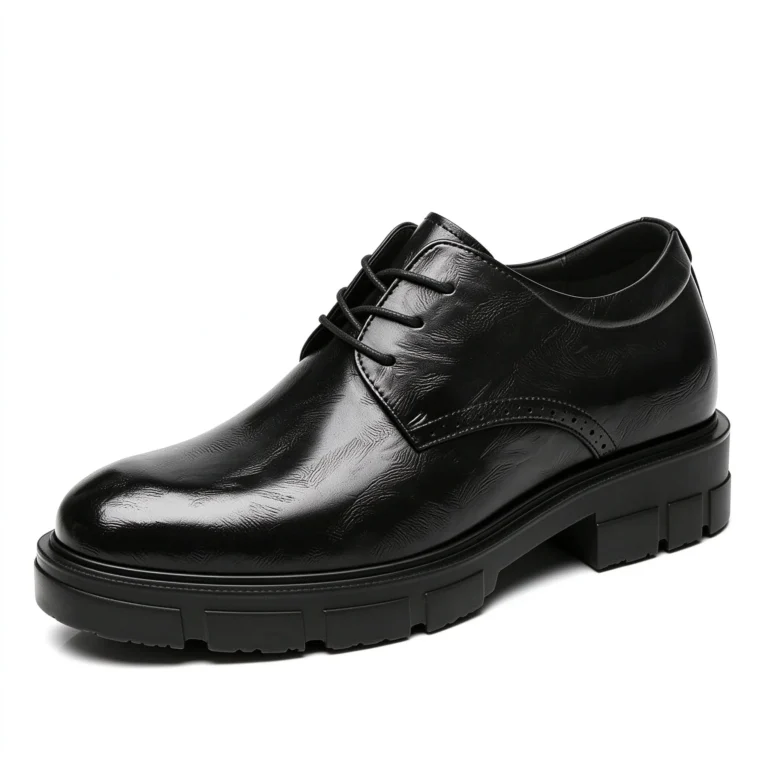
Matching sole and upper color is key for visual lengthening. If the sole is white (like some casual sneakers), a white sole will visually cut off the leg line. Height-increasing dress shoes usually have soles matching the upper (black, dark brown, brown) — this is a visual advantage for business height-increasing shoes.
Height Increase Selection
7 cm is the sweet spot for beginners and everyday occasions: noticeable height increase without affecting walking rhythm. For formal events where you won’t stand for long (like weddings, ceremonies), you can choose 8 cm. But height-increasing shoes over 10 cm will stand out in Taiwanese settings — it’s always better to be conservative than flashy.
5 Outfit Examples
Example 1: Business Work
Dark gray tailored suit jacket + white dress shirt + slim-fit black dress pants (ankle-length) + 8 cm black patent leather Derby shoes + black belt. Accessories: Minimal silver watch.
Example 2: Client Visit
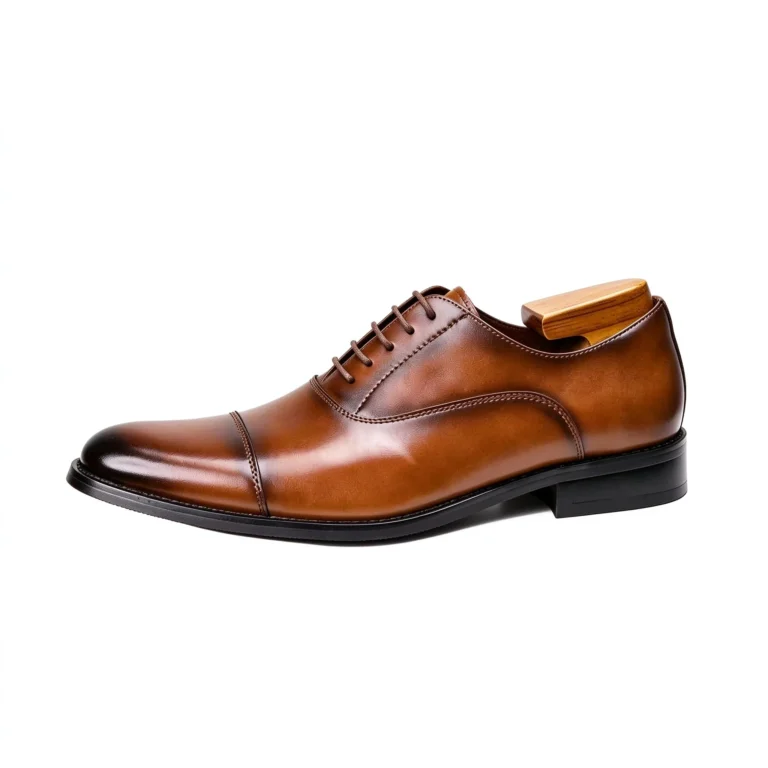
Dark blue single-breasted slim-fit suit + white dress shirt (cuffs rolled up 1 cm to show the shirt cuffs) + gray slim-fit cropped trousers + 7 cm brown three-connection Oxford shoes + brown belt.
Example 3: Weekend Date
Beige slim-fit turtleneck sweater + dark blue slim-fit cropped jeans + 7 cm white German-style training height-increasing shoes + dark brown belt.
Example 4: Wedding Guest
Dark blue slim-fit suit jacket + white stand-collar shirt (no tie) + khaki slim-fit cropped trousers + 6 cm brown Derby shoes + brown belt.
Example 5: Smart Casual Business Attire
White slim-fit crew-neck shirt (tucked in) + dark gray cropped trousers + 7 cm dark brown Derby height-increasing shoes + black belt. Optional: V-neck knit cardigan.
Frequently Asked Questions
Q1: How much structural height increase is needed for a visual height of 180 cm?7 cm of structural height increase plus styling tricks (cropped trousers, slim-fit tops, monochromatic color scheme) can create a visual height of “looking like 178-182 cm”. But this estimate varies per person: a person who is 170 cm tall, adding 7 cm gives an actual height of 177 cm, plus 3 cm of visual boost results in a visual height of 180 cm.
Q2: Will colleagues notice the height-increasing shoes?In daily work settings (mostly sitting, less walking), the chance of being noticed is very low. Over 90% of colleagues in actual tests reported “didn’t notice”. However, in settings where you stand all day (like product launches), with long walking time, details of your gait might give it away, so it’s recommended to get used to wearing them in advance.
Q3: Is a 10 cm visual height increase possible?The limit of styling tricks is a 3 to 5 cm visual boost, plus 7 cm of structural height increase gives a total visual increase of 10-12 cm. Exceeding this range will look unnatural in most settings, and requires appropriate occasions (like modeling, fashion shows).
Conclusion
Turning a 170 cm person into looking like 180 cm isn’t magic, it’sstyling tricks × structural height increasecumulative effect. Cropped trousers lengthen the legs, slim-fit tops elongate the torso, and a monochromatic color scheme extends the visual line—these three tricks add up to a 3-5 cm visual boost, plus 7 cm of structural height increase,actual height + visual boost = overall look close to 180 cm. No need for a noticeable 10 cm increase, and no fear of being found out—with logical styling, every 170 cm guy can look like 180 cm.
Shop the Styles Mentioned in This Guide
Proportion comes down to trouser length and silhouette. These styles match the commute and business looks above.
Recommended styles for this topic
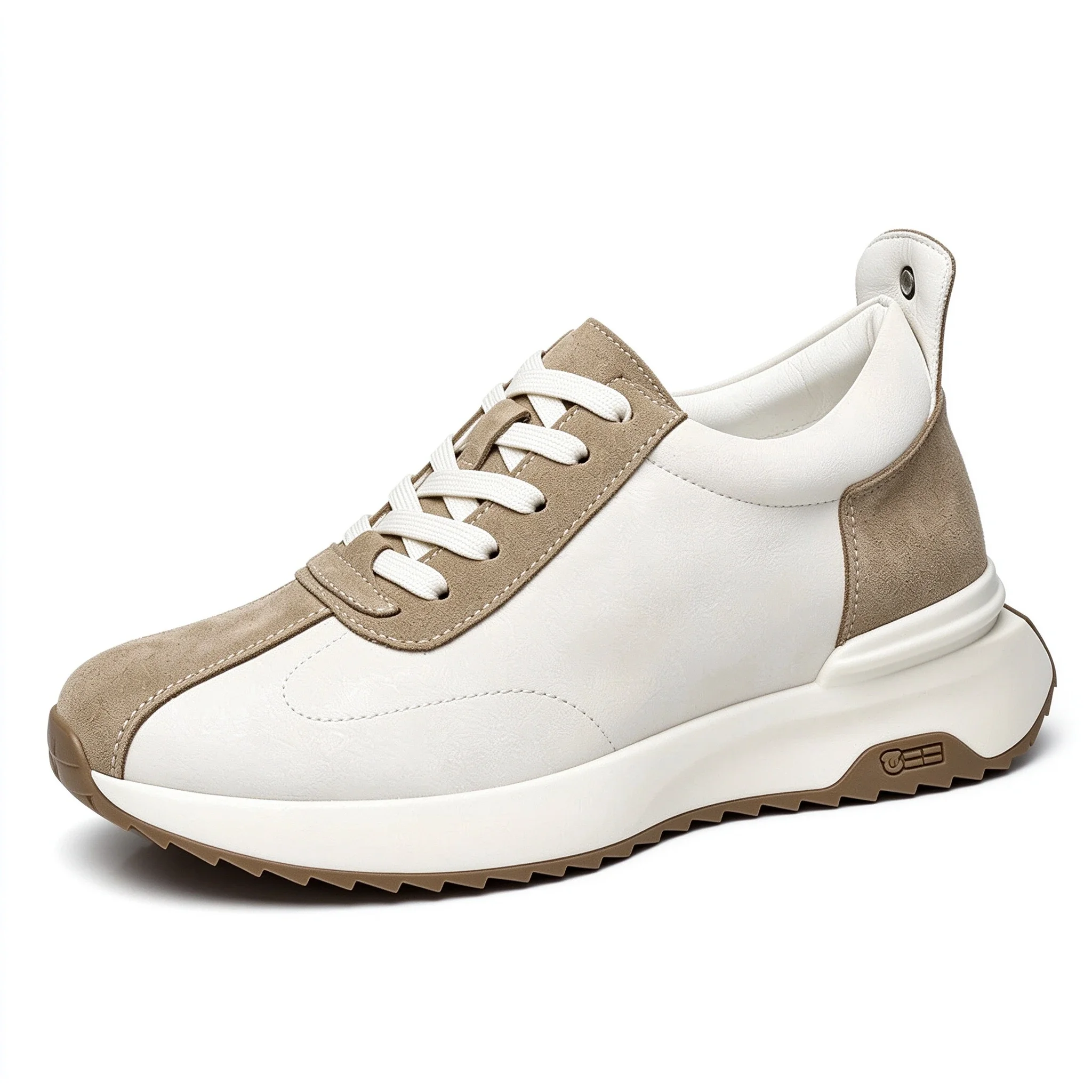
- 8 cm Height-Increasing Shoes | Men's Casual | Vintage Genuine Leather Dad Shoes — Full specs, size chart and product photos
- 5 cm Height-Increasing Shoes | Men's Business Casual | Retro German-Trainer Style Height-Increasing Sneakers — Full specs, size chart and product photos
- 10 cm Height-Increasing Shoes | Men's Business Platform Round-Toe Commuter Dress Shoes — Full specs, size chart and product photos
- 7 cm Height-Increasing Shoes | Women's Casual | Small Paris Retro Dad Shoes — Full specs, size chart and product photos
Further reading
- Commute Height-Increasing Shoes — Height-increasing shoes for the daily commute
- Business height-increasing shoes — Height-increasing shoes for business and interviews
Still deciding? Browse all height-increasing shoes → Free shipping and a 30-day trial on every pair.