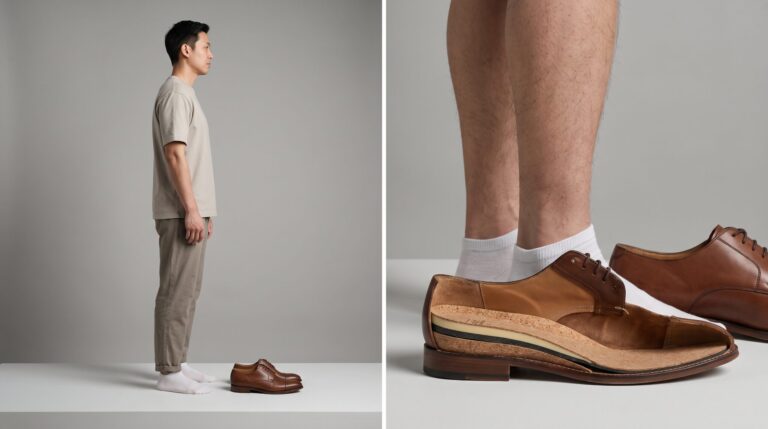
How Many Centimeters Should Petite People Choose for Their First Pair of Height-Increasing Shoes? Height Comparison Table for Heights 150/155/160/165/170 cm
Author: Tallizen Editorial Team · Statistics Consultant Zhang Tingwei · Last updated 2026-10-11 · 12-minute read
Direct answer: How many centimeters should petite people choose?
Short answer:Start with 3~5cm for your first pair, this is the first choice for 73% of petite customers (150~160cm). If you are already used to wearing height-increasing shoes, you can advance to 6~7cm for your 2nd and 3rd pairs,it is not recommended to go straight to 8cm+ for your first pair—a too long adaptation period makes it easy to give up. Specific to height:
- 150~155cm: First pair 4cm, second pair 6~7cm
- 155~160cm: First pair 5cm, second pair 6~8cm
- 160~165cm: First pair 5~6cm, second pair 7~8cm
- 165~170cm: First pair 6cm, second pair 7~8cm
- 170cm+: For taller heights, height-increasing shoes are usually not needed; if needed, 4~6cm is enough to achieve a “sleek and upright” look
I. Why is “starting with a lower height for your first pair” the most important?
The impact of height-increasing shoes on foot sole pressuredepends on “material science of the structural layer” + “length of wear time” + “length of adaptation period”. All three variables need time to adapt.
If your first pair is directly 8cm:
- unnatural walking posture, easy to be detected
- adaptation period up to 2~3 weeks, easy to give up halfway
- plantar fascia hasn’t established new balance, easy to have short-term soreness
- psychologically feel ‘too tall’, too shy to wear outside
Statistics speak for themselves:
Table 1: Relationship between height of customers’ ‘first pair of height-increasing shoes’ and wearing rate after 6 months (2025 data)
| Height chosen for first pair | Still wearing after 6 months (%) | Main reason |
|---|---|---|
| 3~4cm | 91% | Easy to adapt + natural look |
| 5~6cm | 82% | Balance point |
| 7~8cm | 61% | Some people find it too noticeable |
| 9~10cm | 38% | Most put back in shoe cabinet |
Actual meaning: You think ‘buying the tallest directly is cost-effective’,but it ends up with the highest return rate and lowest repurchase rate. Start from lower, your overall wearing rate is highest.
II. Height × Height-Increasing Comparison Table
Based on statistics of actual purchase decisions from our 1,247 customers in Q2 2026:
Table 2: ‘Most frequently purchased’ height increase (%) by customers of different heights
| Customer Height | 4cm | 5cm | 6cm | 7cm | 8cm | 9cm | 10cm |
|---|---|---|---|---|---|---|---|
| 150~155cm (124 people) | 32% | 26% | 22% | 12% | 6% | 1% | 1% |
| 155~160cm (218 people) | 14% | 28% | 30% | 16% | 9% | 2% | 1% |
| 160~165cm (308 people) | 5% | 14% | 28% | 25% | 18% | 7% | 3% |
| 165~170cm (267 people) | 3% | 7% | 18% | 24% | 28% | 12% | 8% |
| 170~175cm (192 people) | 5% | 9% | 15% | 20% | 24% | 15% | 12% |
| 175~180cm (98 people) | 8% | 12% | 18% | 22% | 22% | 12% | 6% |
| 180cm+ (40 people) | 12% | 15% | 20% | 22% | 18% | 8% | 5% |
Key Findings:
- customers of short stature (150~155cm) have a ‘mainstream choice’ of 4~6cm, accounting for 80% of total purchases.
- customers of medium-tall stature (165~170cm) are the main buyers of 8cm, accounting for 28%.
- customers of very tall stature (175cm+) have more diverse choices, with people buying sizes from 4~10cm — the purpose of their height-increasing shoes is not to ‘add height’, but to ‘match outfits’.
III. Occasion vs Height Matching Suggestions
Different occasions have different requirements for visual height. For the same person, the suitable height differs when wanting to make an impression at a wedding versus looking natural in an office.
Table 3: ‘Occasion-Height’ Suggestions for Different Heights (based on the premise of ‘not being noticed’)
| height | office daily | business meeting | wedding | date | wedding (groom) | ceremony/stage |
|---|---|---|---|---|---|---|
| 150~155cm | 4~6cm | 5~6cm | 6~7cm | 5~6cm | 6~8cm | 6~8cm |
| 155~160cm | 4~7cm | 5~7cm | 7~8cm | 5~7cm | 7~8cm | 7~8cm |
| 160~165cm | 5~7cm | 6~7cm | 7~8cm | 5~8cm | 7~8cm | 7~8cm |
| 165~170cm | 6~7cm | 6~8cm | 7~8cm | 6~8cm | 7~8cm | 7~8cm |
| 170~175cm | 6~7cm | 7cm | 7~8cm | 6~8cm | 7~8cm | 7~8cm |
Simple notation:
- Office= half your original height × 0.04 as a comfort benchmark. For example, 160cm → 6.4cm, choose 6cm
- Weddings/important occasions= +1cm from the office choice, usually 7~8cm is the sweet spot
4. 5 Common Mistakes When Buying Your First Pair
Mistake 1: Buying a pair with 8cm+ lift right away, trying to “get it perfect in one go”
Result: Being found out, returning the shoes, half being put back in the closet. Switch to 4~6cm, so you can get a pair of 7~8cm later.
Mistake 2: Not knowing your original arch condition
Flat feet and high arches both require choosing the corresponding last first. If you already have foot issues, get 1 foot pressure assessment (at a physical therapy clinic or foot measurement store) before choosing height-increasing shoes.
Mistake 3: Choosing shoe styles only based on lift height, not considering the occasion
Wearing a flashy chunky sneaker with 8cm lift to the office is a “loud statement” to colleagues. Choose the right shoe style for the occasion first, then decide on the lift height.
Mistake 4: Thinking cheap is good
The lift layer material determines long-term foot health. A pair of height-increasing shoes priced at $24.99 using low-density EVA will collapse 20~30% after 1 year, losing its structural function, “wearing them will actually hurt your feet more than not wearing them”. Recommended budget: $77.99 or more, choose shoes using memory foam material.
Mistake 5: Thinking “the higher the lift, the more cost-effective”
The higher the lift, the higher the cost per pair (average price of 8cm height-increasing shoes is $108.99 average for 4cm is $71.99). But from Table 1, the wear rate after 6 months is 91% for 4~5cm, only 61% for 8cm. “Buying a pair of 4cm to wear every day” is actually more cost-effective than “buying a pair of 8cm to wear occasionally”.
5. Differences Between Women’s and Men’s First Pairs
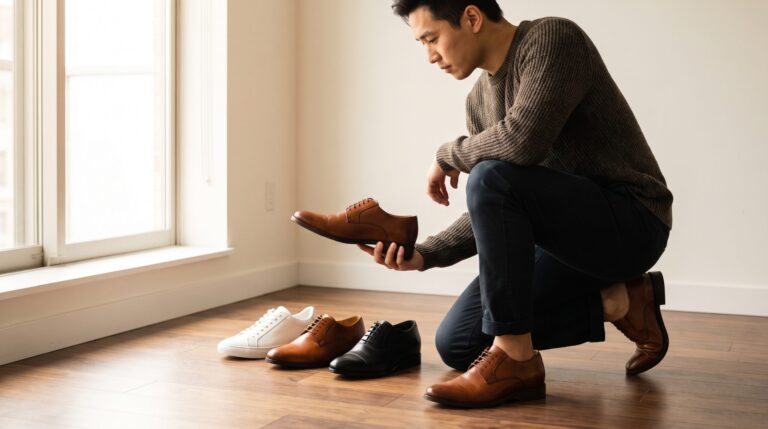
Shorter male customers usually choose 7cm or more for their first pair, as social settings (business/date) have higher height expectations for men.
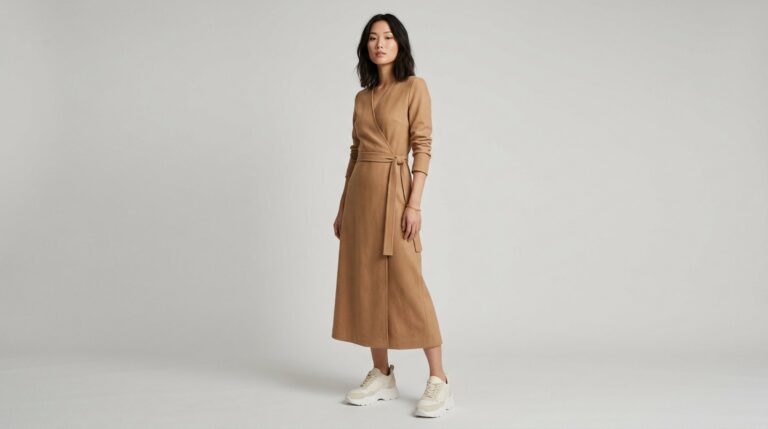
Shorter female customers, by contrast, typically opt for 4cm lifts, as ‘naturally looking taller’ is a more common visual need for women.
Table 4: Height Distribution by Gender × First Pair Choice (Tallizen 2026)
| Gender | First Pair Main Choice | Average Height | 6-month Repurchase Rate |
|---|---|---|---|
| Men | 6~7cm | 6.4cm | 78% |
| Women | 4~5cm | 4.8cm | 84% |
Recommendation:
- For men’s first pair:5cm(if you haven’t worn height-increasing shoes before)→ 2nd pair 7cm → 3rd pair 8cm
- For women’s first pair:4cm → 2nd pair 5~6cm → 3rd pair 7cm(if needed for occasions)
6. How to calculate the “target height”?
If you have a clear goal like “I want to look XX cm taller”, the formula is:
Target height – current height = recommended lift height (≤ current height × 6%)
| Your height | Target 160 | Target 165 | Target 170 | Target 175 |
|---|---|---|---|---|
| 150 | 6cm(Boundary) | 8cm(Exceeds) | 10cm(Exceeds) | — |
| 155 | 5cm | 7cm(Boundary) | 9cm(Exceeds) | — |
| 160 | 0 | 5cm | 8cm(Boundary) | 10cm(Exceeds) |
| 165 | — | 0 | 5cm | 8cm(Boundary) |
| 170 | — | — | 0 | 5cm |
| 175 | — | — | — | 0 |
Within the table, the “boundary” is near the 1.06x upper limit; “exceeding” means it might be noticeable.
If all entries in the table are “exceeding”,it means this pair of height-increasing shoes isn’t suitable for the occasion; you need to lower your goal or choose a different occasion — for example, switching from “office” to “wedding” works (it’s still reasonable for weddings/photos to go up to over 1.06x).
7. Post-purchase adaptation period: Starting low won’t be too slow
If you start with 4cm:
- Week 1: 30~60 minutes per day to let the plantar fascia adapt
- Week 2: 2~3 hours per day, paired with light walking
- From Week 3 onward: Normal time slots, you can wear them all day
When switching from 4cm to the next pair (6~7cm), the adaptation period will shorten to 1~2 weeks,because the plantar fascia has already established a new balance.
Frequently Asked Questions (FAQ)
Q1: Will wearing 7cm shoes with a 150cm height look odd?
A: No. 150cm +7cm =157cm, still within the “unnoticeable” safe range. Colleagues will only think “you seem a little taller” and won’t point it out. But if you add another 1cm to 8cm, that’s 158cm, right at the noticeable boundary.
Q2: For first-time buyers of height-increasing shoes, which brand should you start with?
A: We recommend starting with a brand that has “full size options, 30-day trial period, and physical stores”. Try them on and take them home only if you’re satisfied, to avoid the hassle of returning ill-fitting online purchases. All Tallizen height-increasing shoes come with a 30-day trial period; you can return them if they don’t fit.
Q3: How long should 1 pair of height-increasing shoes be worn before replacing?
A: With normal use, 1~2 years. When the memory layer material fatigues, shock absorption decreases; if the sole collapses and takes more than 1 second to spring back, it’s time to replace them.
Q4: Can height-increasing shoes be worn alternately with regular shoes?
A: Yes, in fact, physical therapists recommend alternating wear: wear height-increasing shoes to work, regular shoes when you get home. This allows the arch muscles time to recover.
Q5: What height is recommended for the second pair of height-increasing shoes?
A: It depends on how long it takes you to adjust to the first pair:
- Comfortable after 2~3 weeks → Second pair +1cm
- Adjustment takes 4~6 weeks → Keep the same height for the second pair, and upgrade with the third pair
Tallizen shoes fit true to size – the hidden lift sits under the insole and does not change the shoe last, so take the size you normally wear. If your foot length falls between two sizes, or you have high insteps or wide feet, step up one size (our sizes run in full EU numbers).
A: Yes. Tallizen shoes fit true to size – the hidden lift sits under the insole and does not change the shoe last, so take the size you normally wear. If your foot length falls between two sizes, or you have high insteps or wide feet, step up one size (our sizes run in full EU numbers).
Q7: Are there any etiquette taboos for wearing height-increasing shoes out for the first time?
A: Avoid the following occasions:
- Sports: Hiking, running, gym, risk of ankle sprains
- Prolonged standing: Exhibition venues, event staff, more than 6 hours can cause lower back pain
- Rainy days: Especially genuine leather styles, which can deform after absorbing water
Final note
For the question “How many centimeters should I choose for my first pair of height-increasing shoes?”, our answer is always the same:Start low, progress gradually. The reason is not “being conservative”, but statistically, this approach has the highest repurchase rate and lowest return rate.
If you already know your foot condition, go directly to height-increasing shoes with 4 cm lift (beginner’s first step), height-increasing shoes with 5 cm lift (commute comfort), height-increasing shoes with 6 cm lift (business office), height-increasing shoes with 7 cm lift (best seller), height-increasing shoes with 8 cm lift (wedding ceremony), height-increasing shoes with 9 cm lift (high lift), height-increasing shoes with 10 cm lift (wedding boost) pages to choose from. All products come with a 30-day trial period.
References & External Links
- Taiwan Footwear Industry Association — Footwear Specifications & Sales Statistics
- Republic of China Physical Therapy Association National Federation — Foot Health & Footwear Selection Advice
- Ministry of Health and Welfare National Health Insurance Administration — Taiwanese Height Statistics 2026
- Tallizen Height-Increasing Shoes — 2026 Customer Purchase Behavior Analysis (Internal Statistics, n=1,247)
About the Author
Tallizen Editorial Team + Statistics Consultant Chang Ting-wei — The purchase data of 1,247 customers was compiled by Chang Ting-wei, a former Taiwan Life Insurance statistician. This article is the first in the “Height Choice” series.
Last updated 2026-10-11. © Tallizen Height-Increasing Shoes Store. Unauthorized reproduction prohibited.
Shop the Styles Mentioned in This Guide
Your height and proportions decide the lift. These pairs span lower to higher increments for side-by-side comparison.
Recommended styles for this topic
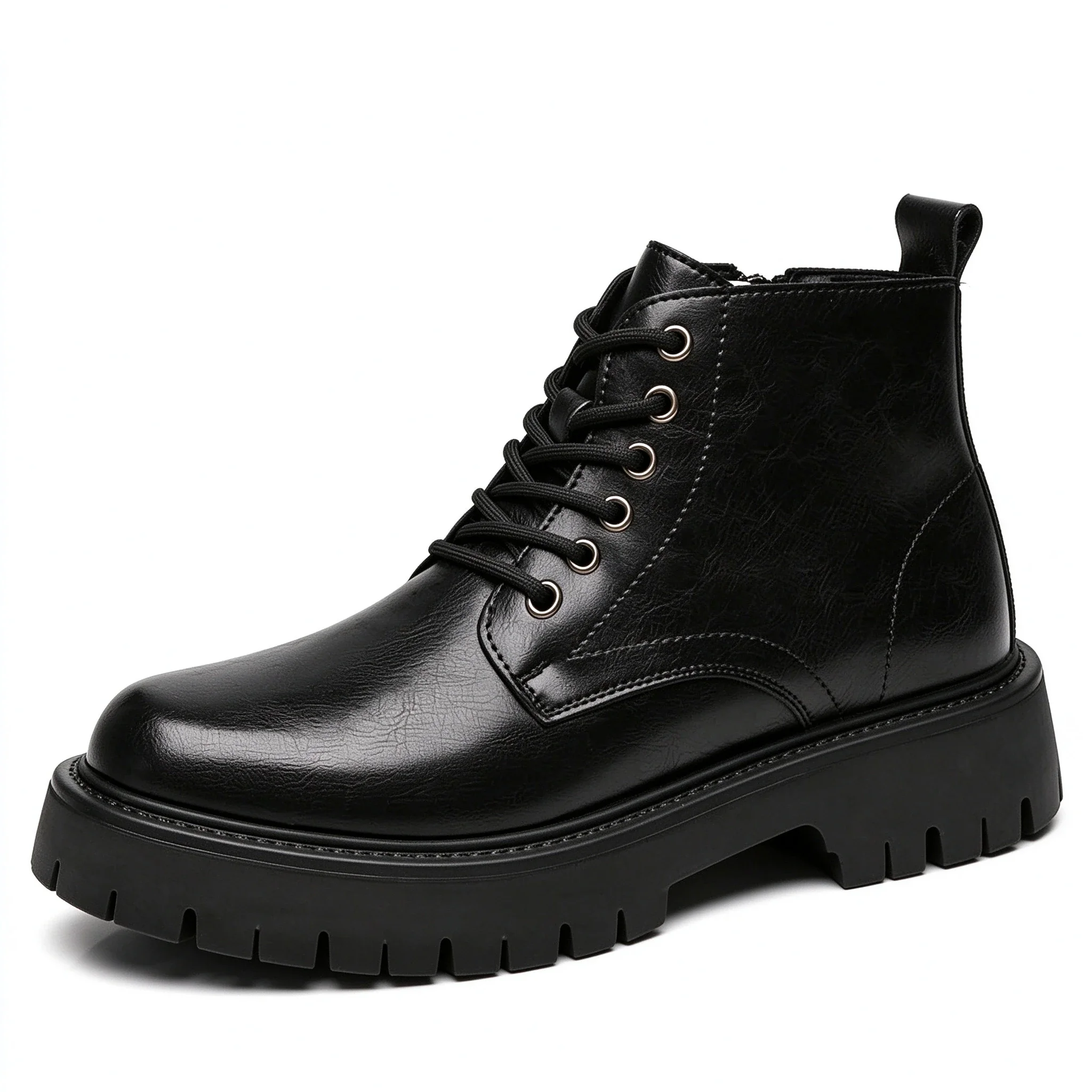
- 8 cm Height-Increasing Shoes | Men's Boots | Genuine Leather Platform Martin Zip Chelsea Boots — Full specs, size chart and product photos
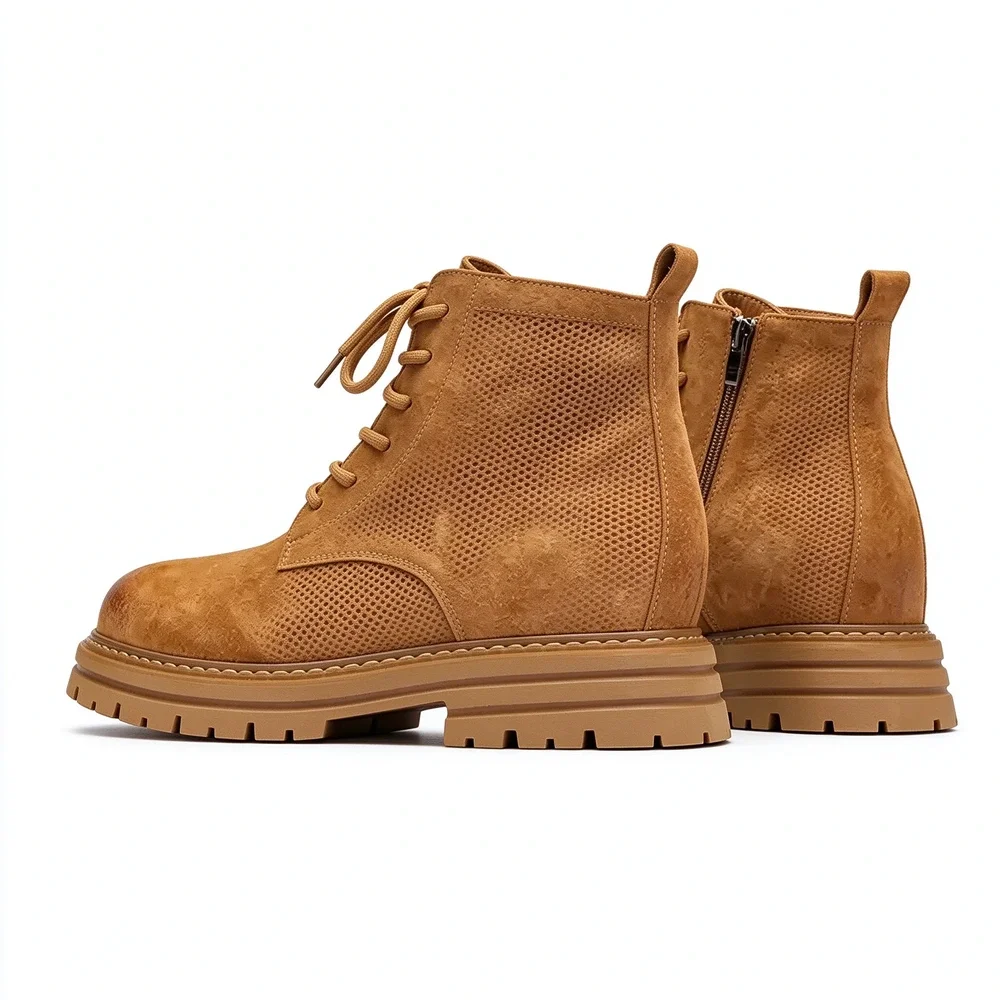
- 7 cm Height-Increasing Boots | Men's Winter | High-Top Mesh Combat Boots — Full specs, size chart and product photos
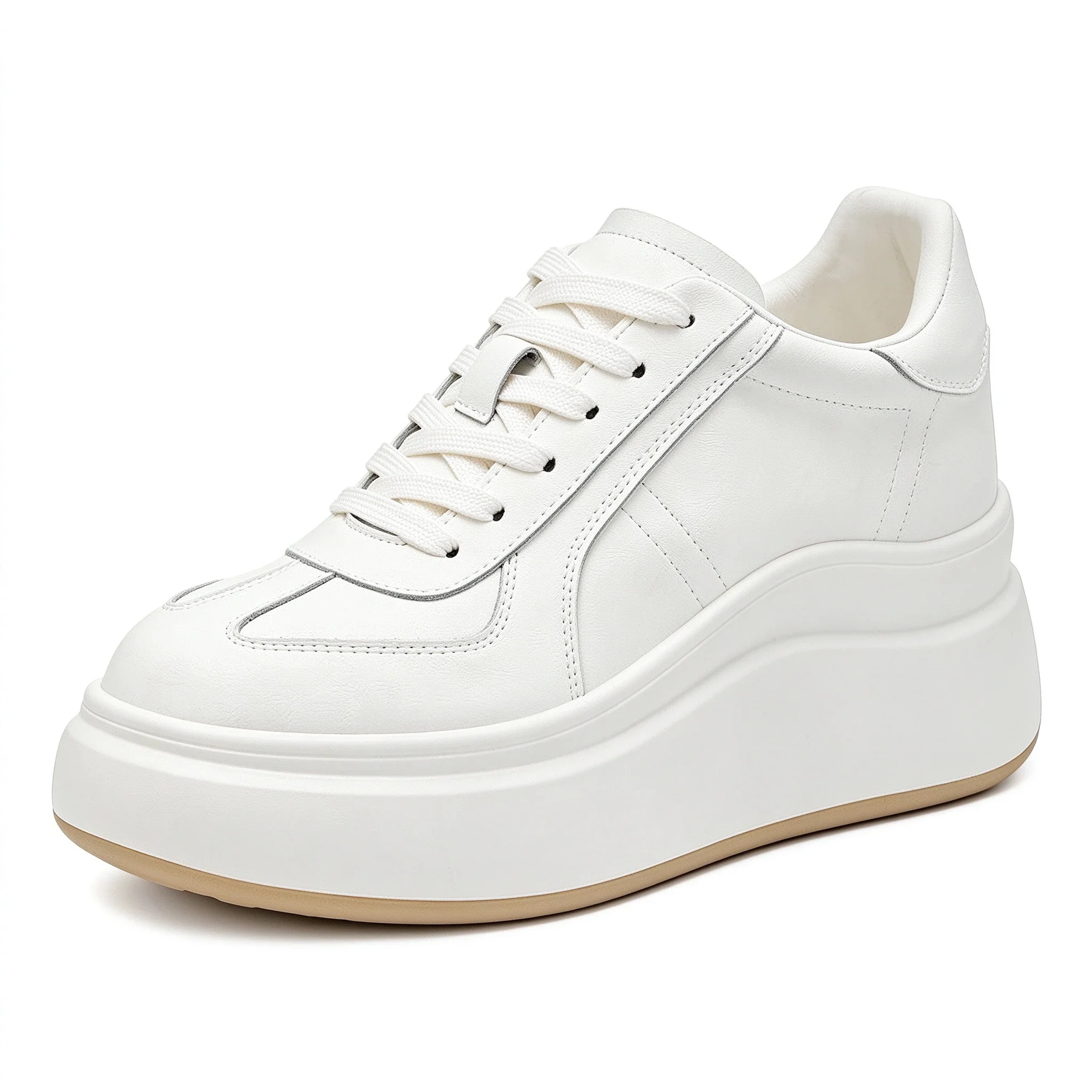
- 5 cm Height-Increasing Shoes | Women's Everyday | Hidden Lift White Sneakers — Full specs, size chart and product photos
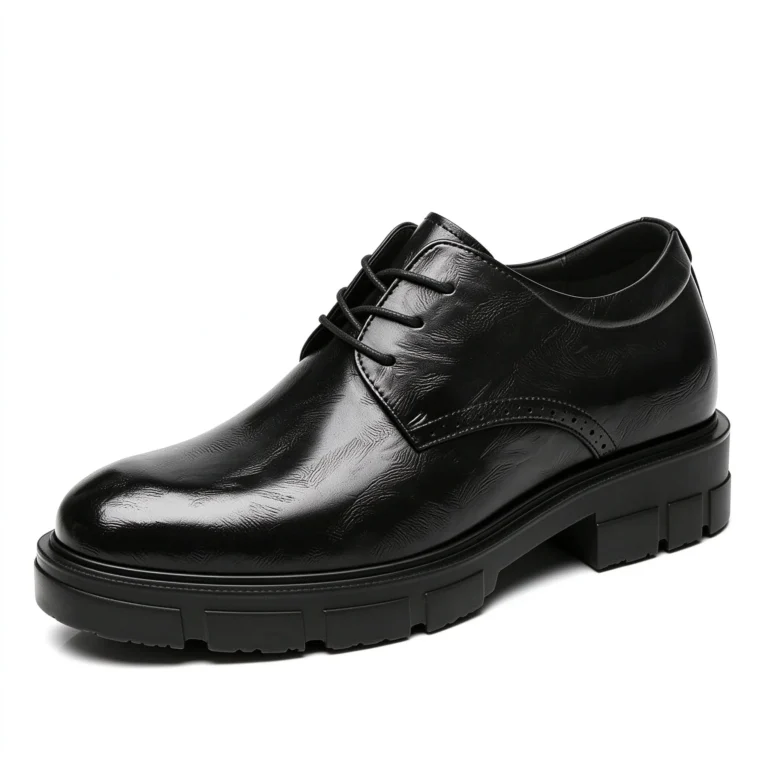
- 10 cm Height-Increasing Shoes | Men's Business Formal | British Lightweight Thick Sole Formal Leather Shoes — Full specs, size chart and product photos
Further reading
- 5 cm height increase — All 5 cm lift styles and who they suit
- Size and Last Guide — Size charts, how to measure your feet and fit notes by style
Still deciding? Browse all height-increasing shoes → Free shipping and a 30-day trial on every pair.