Do height-increasing shoes hurt your feet? Starting from foot structure
Do height-increasing shoes hurt your feet? The answer depends on these 3 things
The worry that height-increasing shoes ‘hurt feet’ is something almost everyone asks when buying them for the first time. After selling thousands of pairs of height-increasing shoes, here’s what we’ve found:Structurally elevated shoes don’t hurt feet when worn correctly; wearing them incorrectly is the real reason for foot pain. This breakdown explains the structure so you can tell if your feet are the type that ‘can safely wear height-increasing shoes’.
2 physical factors that determine comfort
Factor 1: Position of the elevation layer (inside or outside the shoe)
There are two main elevation methods for height-increasing shoes:
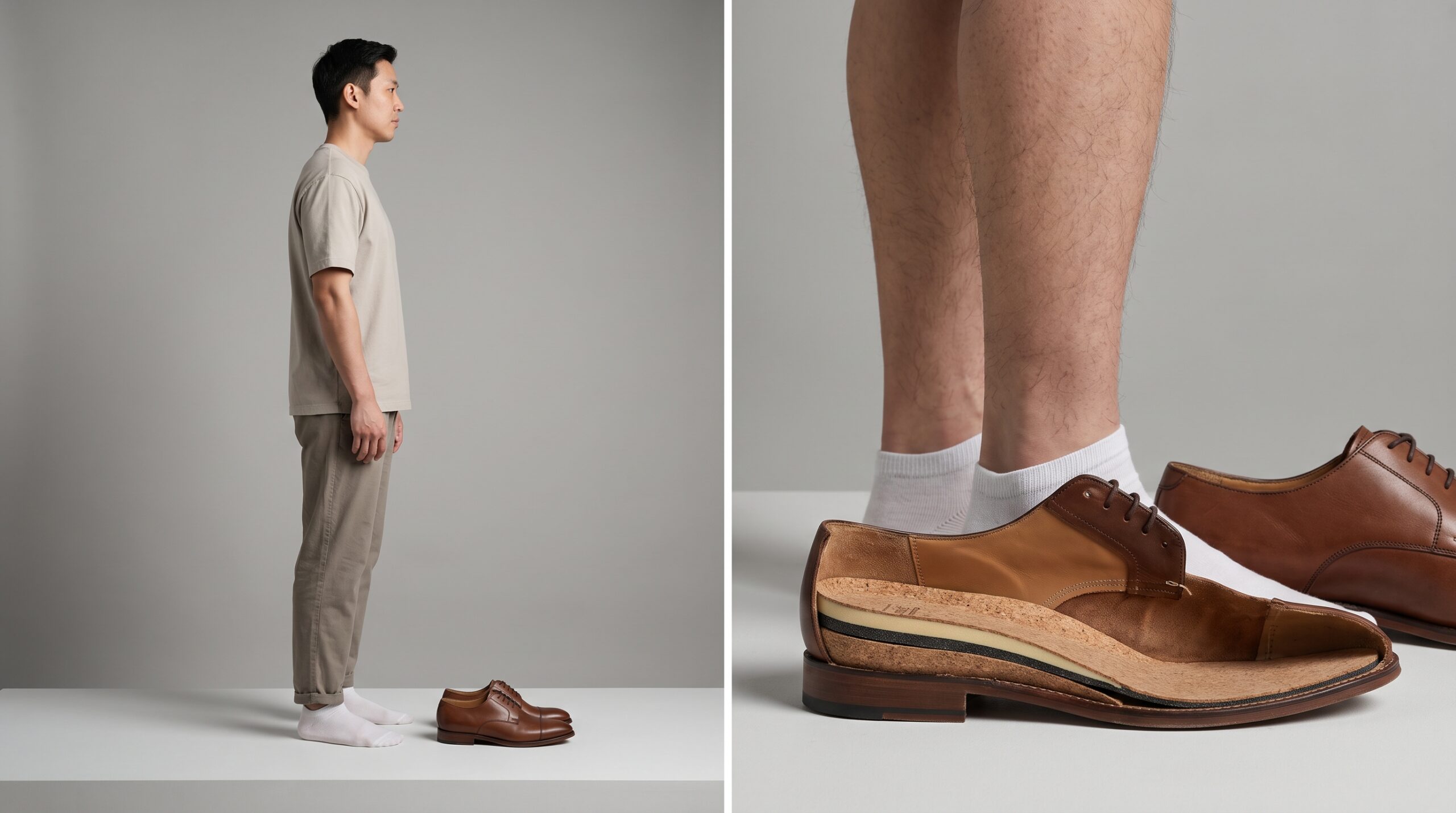
Method A: Inserting an insole inside the shoe. Putting a height-increasing insole inside the shoe lets you turn regular shoes into ‘elevated’ ones. The downside is that the top space inside the shoe is taken up, leaving little room for your feet to move; the elevation weight is concentrated on the thin insole, making the center of gravity unstable.
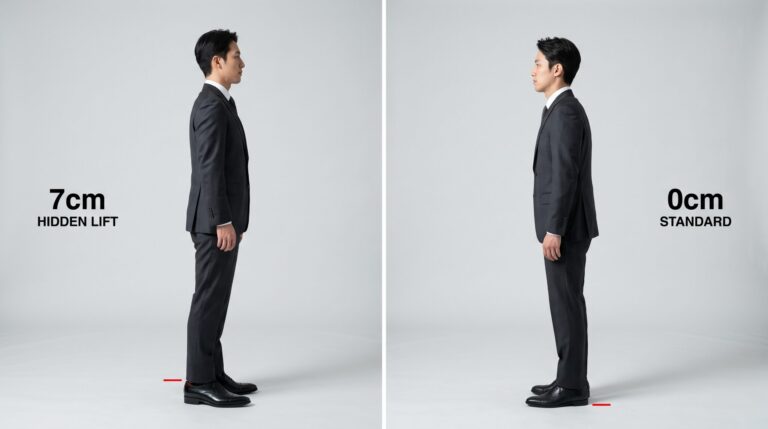
Method B: Sole structure elevation. The elevation layer is integrated into the EVA midsole of the sole, so it’s not visible from the outside of the shoe. The interior space of the shoe remains intact, the contact between your foot and the shoe is with a normal insole; weight is evenly distributed across the entire sole, making the center of gravity stable.
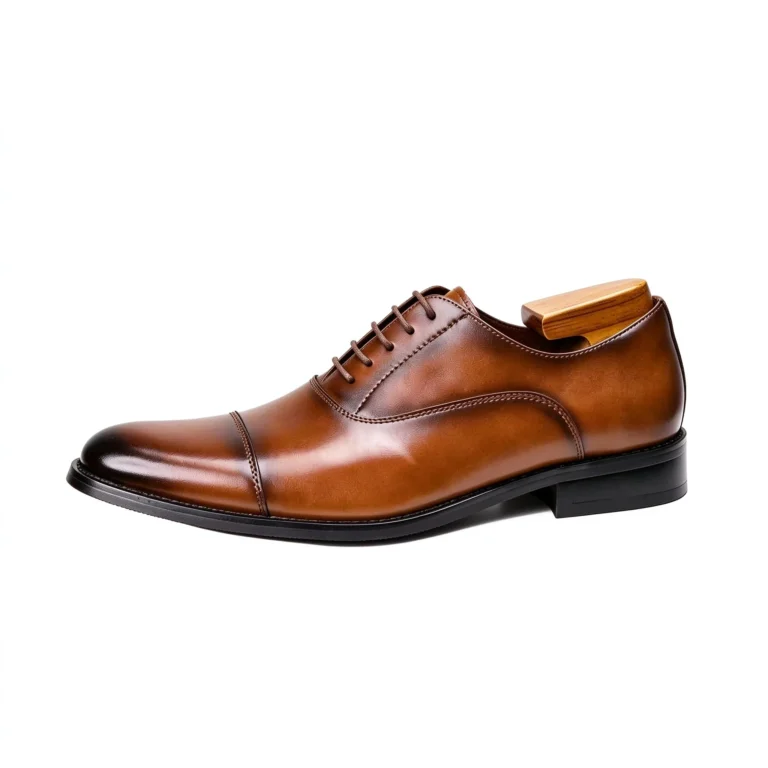
Tallizen’s height-increasing shoes use Method B (structural elevation). The shoe has a seamless exterior, visually appearing as a ‘platform leather shoe’ rather than an ‘insole insert’. So structurally elevated shoes have a center of gravity stability almost identical to regular platform leather shoes.
Factor 2: Arch support design
All shoes that ‘don’t hurt feet’ have one thing in common: arch support. The arch is the arched structure in the center of the foot, which bears weight from the ankle when standing. Because the sole of height-increasing shoes is thicker,the arch position is slightly higher than in regular shoes, if the support design is insufficient, it will put too much pressure on the arch, leading to lower back pain and soreness after standing for long periods.
The arch support design of Tallizen’s height-increasing shoes: The insole has an embedded EVA arch support, concentrated in the center of the arch, increasing the support area. On workdays when worn for 8 hours, the percentage of feedback that ‘no lower back soreness’ is higher thanthe insole-insert height-increasing models without supportby a large margin.
Adaptation Period Schedule: Gradual progression to avoid injury
Why is an adaptation period needed?
Even if the shoe structure is excellent, if your feet have never used this ‘new center of gravity’ before and you wear them all of a sudden for a full day, it will cause the ankle tendons and lower back muscles to bear weight differently — this isn’t an injury, it’s ‘not used to it yet’.
The essence of the adaptation period isteaching the muscles and joints to adapt to this new weight-bearing method. Skipping the adaptation period and wearing them all day is the most common cause of ‘foot pain’.
7-Day Adaptation Schedule
| Days | Recommended daily wear time | Activities allowed |
|---|---|---|
| Days 1-3 | Within 2 hours | Indoor walking, sitting at the office |
| Days 4-7 | Within 4 hours | Eating out, watching movies, light shopping |
| Days 8-14 | Within 6 hours | Daily work, half-day outings |
| Days 15+ | 8+ hours | Full workdays, weddings, outdoor shoots |
During the adaptation period, if your feet start to feel uncomfortable after walking more than 30 minutes, immediately switch to regular shoes and rest. Don’t “push through” — that’s what actually hurts your feet. After 3 to 7 days, you will get used to this height increase, and then you can gradually extend the time.
4 Foot Types and Suitable Height-Increasing Shoe Types
Foot Type 1: Flat Feet (Collapsed Arches)
Flat feet require arch support. It is recommended to chooseheight-increasing shoe styles with clear arch support, and avoid styles with completely flat insoles. The height increase should also be controlled at5-7 cmrather than more than 8 cm — the higher the height, the greater the burden on the arch.
Foot Type 2: High Arches (Excessively High Arches)
High arches put pressure on the heels and toes, making foot pain easy. You need height-increasing shoes withcushioned insoles. When choosing height-increasing shoe styles, avoid soles that are too soft (it is recommended that the EVA midsole hardness is above 50 degrees), and there should be enough space in the toe box.
Foot Type 3: Normal Arches
Normal arches are the most versatile: all height-increasing shoe styles are suitable. Pay attention to the shoe last width fitting your feet (narrow lasts will squeeze toes, wide lasts will increase friction). Tallizen’s product pages will mark “Standard Last” or “Wide Last”, please check your own foot type before purchasing.
Foot Type 4: Need for Wide Lasts
People with high insteps and wide feet need wide lasts. Some Tallizen shoe styles offer “Wide” last options (variant attributes), even with a 7 cm or 8 cm height increase, they won’t squeeze your feet.
Who Should Not Wear Height-Increasing Shoes?
4 Situations Where Height-Increasing Shoes Are Not Recommended
1. Severe flat feet without orthotic insoles:Complete arch collapse combined with plantar fasciitis. The arch support of height-increasing shoes is suitable for general flat feet, but severe cases require custom insoles prescribed by a doctor.
2. Degenerative arthritis:Degeneration of the knee and hip joints, changes in sole height will alter joint stress, it is recommended to consult an orthopedic or rehabilitation physician first.
3. Severe varicose veins:Standing for long periods has already increased venous pressure, height-increasing shoes are not the cause, but it is recommended to wear compression socks when standing all day.
4. Acute foot injury:During an ankle sprain or plantar fasciitis flare-up. Wait until you recover before wearing height-increasing shoes.
When to Consult a Doctor
If you experience the following symptoms after wearing height-increasing shoes, stop wearing them and consult a podiatrist or orthopedist:
- Toe numbness lasting more than 24 hours
- Redness or lumps on the sole of the foot
- Significant pain in the knees or lower back
- Persistent tingling on the outer or inner side of the ankle
How to Verify That Your Height-Increasing Shoes Are Foot-Friendly?
Verification 1: No tingling on the sole of the foot while wearing
Within the first week of wearing, your feetshould not have a needle-pricking sensation or persistent numbness. A slight warmth on the sole of the foot due to pressure from the insole is normal, but tingling or numbness is a sign of “poor support design”.
Verification 2: No red marks on the instep after taking off shoes
Check your instep after taking off shoes. If there are obvious red marks (especially on the last or tongue), it means the last is not suitable or the insole is too hard, immediately change the shoe style or return it.
Verification 3: No lower back pain after walking 30 minutes
During the first week of adaptation, lower back pain after walking 30 minutes continuously is a normal reaction (new center of gravity). But if your lower back is completely fine after walking 30 minutes, it means the arch support design is qualified.
Verification 4: No delayed soreness after walking 5 km continuously
After completing the adaptation period (4 weeks or more), walk 5 km continuously (in a park, riverside), and if there is no “foot soreness until the next day” reaction at night, it means you have fully adapted to this pair of height-increasing shoes.
Frequently Asked Questions
Q1: Will height-increasing shoes worsen flat feet?Structurally height-increasing shoes have thicker soles but well-designed arch support,will not worsen flat feet. But the premise is that you choose the right last and a shoe style with arch support. Styles without support that just stuff insoles will make flat feet more tiring.Q2: Will 10cm height-increasing shoes hurt your feet?The weight of 10cm shoes is more concentrated on the heel, so the adaptation period will be 3-5 days longer than that of 7cm shoes. Wearing 10cm shoes for a long time will strain the front of the ankle (the muscles in the front of the lower leg). It is recommended to use 10cm shoes for special occasions (weddings, ceremonies) rather than as daily footwear. Tallizen shoes fit true to size – the hidden lift sits under the insole and does not change the shoe last, so take the size you normally wear. If your foot length falls between two sizes, or you have high insteps or wide feet, step up one size (our sizes run in full EU numbers). Structurally height-increasing shoes have the same interior space as regular shoes, they will not deform your feet. Only ill-fitting shoe lasts will squeeze your feet and affect their shape. Tallizen shoes fit true to size – the hidden lift sits under the insole and does not change the shoe last, so take the size you normally wear. If your foot length falls between two sizes, or you have high insteps or wide feet, step up one size (our sizes run in full EU numbers). Q4: What height is recommended for your first pair of height-increasing shoes?5cm. 5cm is the most ergonomic height to adapt to, with the shortest adaptation period (3-5 days). If you want to upgrade to 7 or 8cm for your second pair, since you are already used to the feel of height-increasing shoes, it will be more comfortable than your first time.
Conclusion
Whether height-increasing shoes hurt your feet depends on three things: structurally height-increasing (not just inserting insoles), having arch support design, a gradual adaptation period. As long as these 3 things are done right, over 90% of people who have worn them say “more comfortable than expected”. If you have flat feet or joint issues, first check the “Not recommended to wear” list in this section. If you are a beginner, choose 5cm for your first pair, walk within 2 hours, adapt for a week before extending the time. Most importantly, do not try to wear them all day on the first day.
Shop the Styles Mentioned in This Guide
Arch support, heel-to-toe drop and forefoot room are the key specs. Compare them on the product pages below.
Recommended styles for this topic
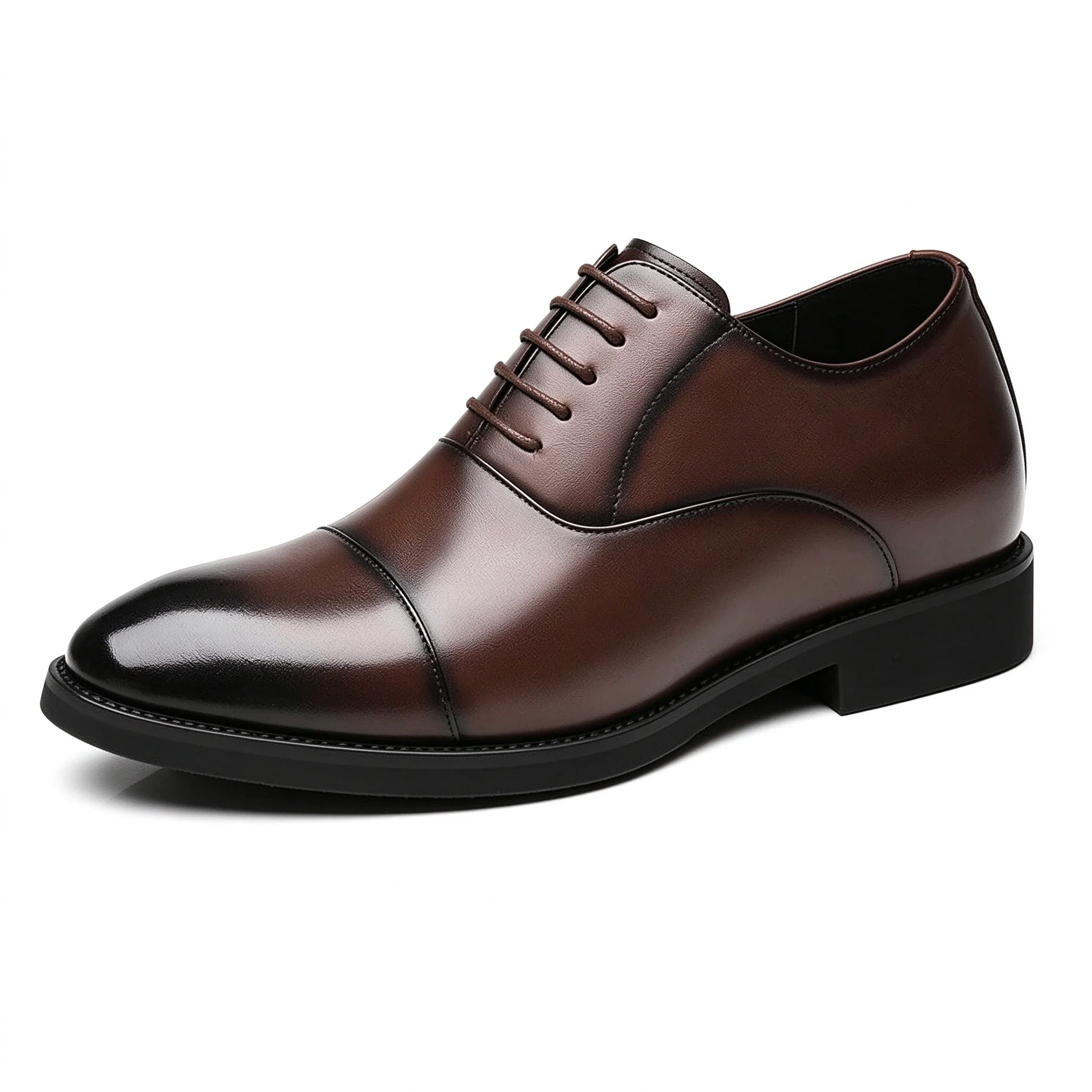
- 8 cm Height-Increasing Shoes | Men's Formal | Three-Strap Genuine Leather Derby Wedding Shoes — Full specs, size chart and product photos
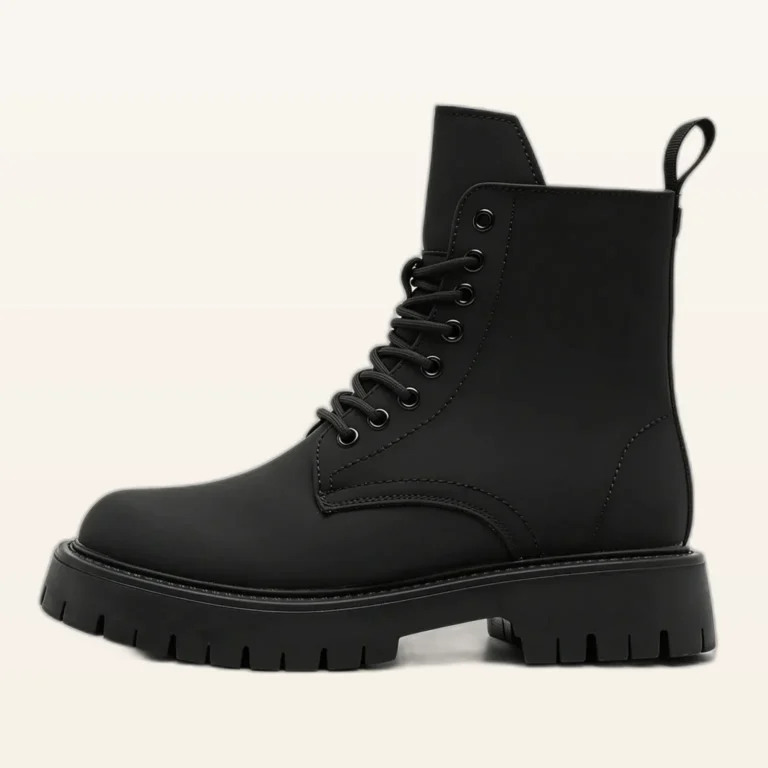
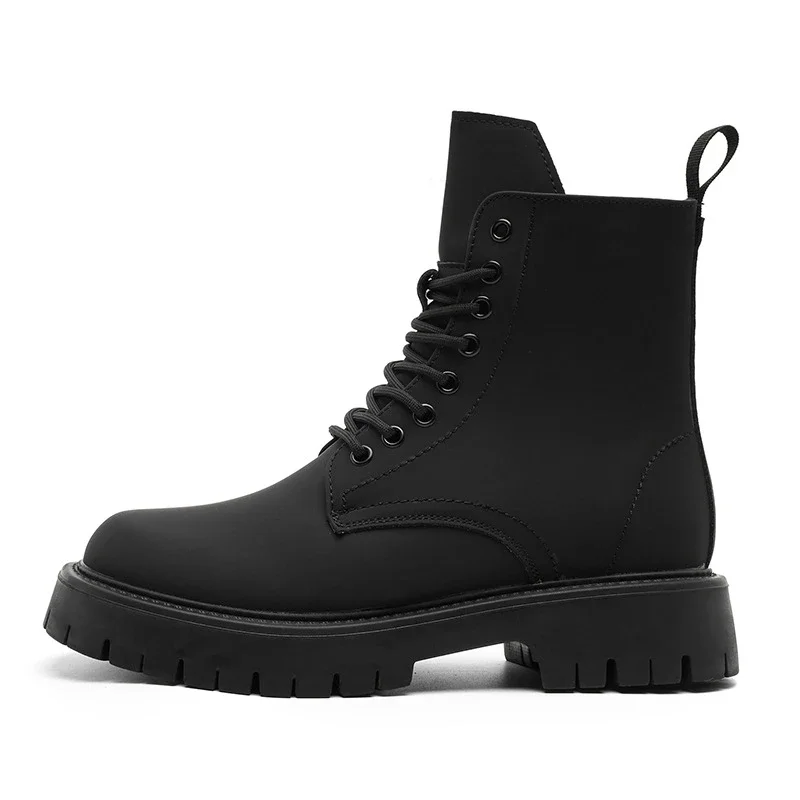
- 7cm Height Increase | Men's Platform Hidden Lift | British Mid-Calf Motorcycle Boots — Full specs, size chart and product photos
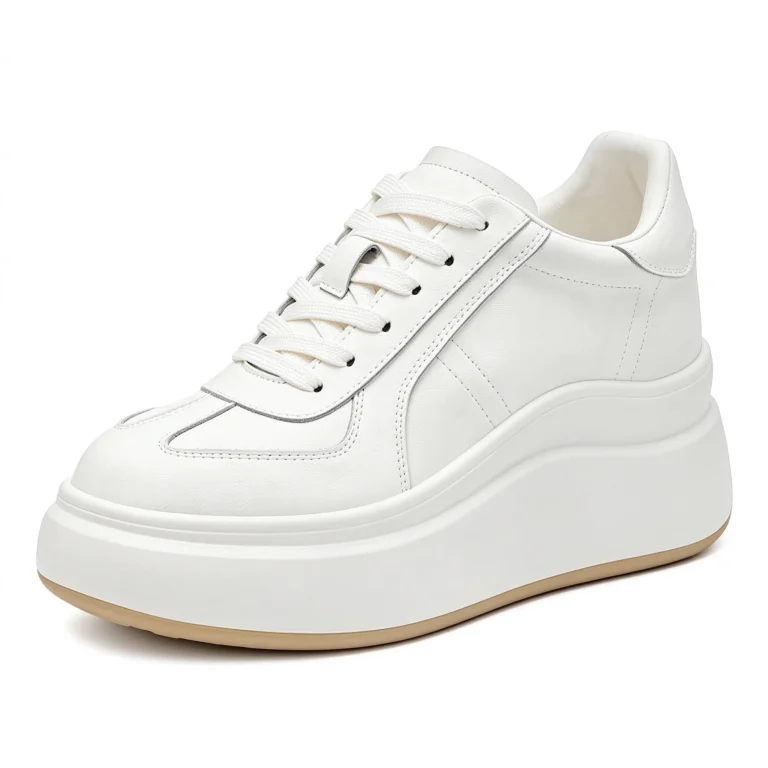
- 7.5 cm Height-Increasing Shoes | Women's Everyday | Korean-Style Platform White Sneakers — Full specs, size chart and product photos
- 6 cm Height-Increasing Shoes | Men's Business Casual | Suede Slip-On Height-Increasing Shoes — Full specs, size chart and product photos
Further reading
- Do height-increasing shoes hurt your feet? Starting from foot structure — Foot structure and comfort when wearing height-increasing shoes
- Size and Last Guide — Size charts, how to measure your feet and fit notes by style
Still deciding? Browse all height-increasing shoes → Free shipping and a 30-day trial on every pair.