Do height-increasing shoes hurt your feet? A complete analysis by orthopedic doctors + physical therapists
Author : Tallizen Editorial Team · Reviewed by Lin Junhong, Advisor of the Republic of China Physical Therapy Association · Last updated 2026-10-11 · 16-minute read
Direct answer: Do height-increasing shoes hurt your feet?
Short answer: Height-increasing shoes with the right structure and proper wear won’t hurt your feet, just like regular shoes. But poor material, wrong shoe last, or improper wear (e.g., wearing them all day or running in them) will cause short-term blisters, medium-term plantar fasciitis, and long-term hallux valgus. There are “7 major warning signs + 4 self-check steps” later in this article, so you can confirm for yourself before wearing them.
I. What are the differences between height-increasing shoes and regular shoes in podiatric medicine?
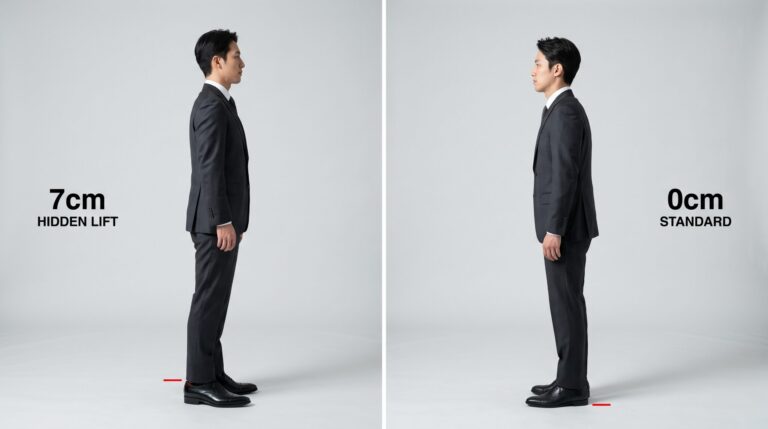
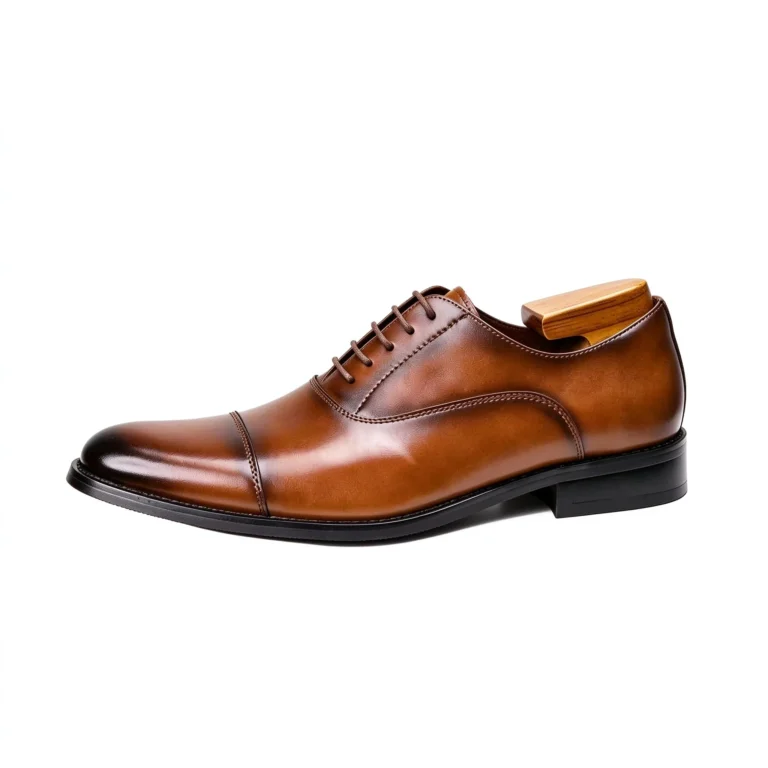
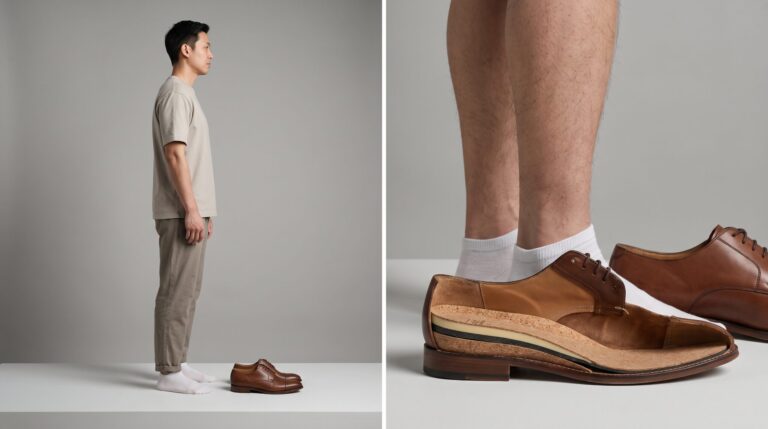
From a podiatric perspective, the only differences between height-increasing shoes and regular shoes are “sole height” and “internal space”; all other structures (toe box, shoe last, upper material, insole) can be exactly the same.
Table 1: Medical property differences between height-increasing shoes vs regular shoes
| Comparison Items | Regular Shoes | hidden lift shoes | external height-increasing shoes (thick sole) |
|---|---|---|---|
| Heel Height | 0~3cm | 3~10cm | 4~8cm (overall thickened) |
| Center of Gravity Position | Natural landing | Slightly shifted forward 5~8° | Same as above but more obvious |
| Plantar Pressure Distribution | Even | Slightly shifted forward | Significantly shifted forward |
| Ankle Stability Requirement | Medium | Medium-high | High |
| Toe Box Space Requirement | Standard | +1~2mm (to reserve space for hidden lift layer) | Unchanged |
| Adaptation Period | 0~2 days | 3~7 days | 5~10 days |
Key Conclusion: height-increasing shoes’ impact on feet isn’t ‘harmful’ but ‘needs time to adapt to’. A properly structured pair of height-increasing shoes, compared to a pair of 5cm high heels, actually exerts less pressure on the sole of the foot (because high heels put single-point pressure on the elevated heel, while height-increasing shoes distribute pressure evenly across the entire layer).
II. Orthopedists point out: The 4 real reasons height-increasing shoes hurt feet
Height-increasing shoes hurt feet, the real reason isn’t ‘height increase’ itself, but the following 4 reasons:
2.1 Too narrow shoe last + toe squeezing → bunion
Some low-quality height-increasing shoes compress the internal space of the shoe last to fit the height-increasing layer, causing the big toe to be squeezed against the second toe when walking. Over time, the joint at the base of the big toe will protrude outward, forming the so-called ‘bunion’ (hallux valgus).
Medical diagnostic criteria for bunion: The big toe deviates outward by more than 15°. The Physical Therapists Association recommends that when choosing height-increasing shoes, ‘the big toe should have more than 1cm of movement space inside the shoe’.
2.2 Too hard sole, insufficient shock absorption → plantar fasciitis
If the height-increasing layer uses low-density EVA or foam without memory rebound function, the impact force of 2~3 times body weight with each step will be transmitted along the heel → plantar fascia → calcaneal tuberosity. Long-term this will cause tiny tears in the plantar fascia, with especially severe pain when taking the first step after waking up in the morning (this is a typical symptom of plantar fasciitis).
Physical therapists recommend: When choosing height-increasing shoes, press the sole with your finger, if it rebounds within0.5 seconds it is a qualified memory layer. If it takes more than 1 second to rebound = insufficient shock absorption, easy to hurt feet.
2.3 Insufficient heel coverage → unsteady walking + ankle sprain
The higher the height-increasing layer, the more coverage the heel needs (U-shaped cup or hard heel) to stabilize the ankle. Some cheap height-increasing shoes only have a thin layer of fabric wrapping the heel, when walking the heel will sway 3~5mm left and right inside the shoe, over time it will cause chronic inflammation of the outer ankle ligament.
2.4 Wearing for too long + no adaptation period → flat foot arch
A new pair of height-increasing shoes (especially those over 6cm), if you wear them and walk for 8 hours straight , the plantar fascia, intrinsic arch muscles, and Achilles tendon won’t have time to adapt to the new center of gravity, leading to short-term soreness, and in the long term, it can easily cause the arch muscles to “slack off”, resulting in arch collapse (flat feet).
The correct approach : Wear them for 30~60 minutes daily in the first week, 2~3 hours daily in the second week, and wear them for normal periods starting from the third week.
III. Hidden risks orthopedists overlook: 7 key foot warning signs
If you experience the following 7 symptoms before or after buying height-increasing shoes, it means “the shoes don’t fit you” — replace them immediately or consult a doctor:
| Alert | Possible Causes | Recommendations |
|---|---|---|
| ① Heel pain on first step when getting out of bed in the morning | Early stage of plantar fasciitis | Replace with memory foam insoles and consult a doctor |
| ② Hard lump at the base of the big toe | Early stage of hallux valgus (bunion) | Switch to shoes with a wide toe box |
| ③ Persistent pressure and redness on the little toe | Too narrow shoe last | Switch to shoes with a wide toe box |
| ④ Chronic soreness on the outer ankle | Insufficient heel coverage | Switch to shoes with a rigid heel design |
| ⑤ Tightness in the front of the lower leg after walking over 1 hour | Overworked tibialis anterior muscle (long adaptation period) | Reduce daily wear time, extend after 3 months |
| ⑥ Pain on the inner side of the knee | Excessive height increase, shifted center of gravity | Reduce height increase by 1~2cm |
| ⑦ Lower back pain for more than 3 consecutive days | Pelvic anterior tilt compensation | Evaluate by a physical therapist, may need to reduce height |
Any of these 7 warning signs, are not necessarily caused by height-increasing shoes — they may be issues you already had that are now being “highlighted” by a new pair of shoes. Physical therapists recommend: if you have a history of flat feet, leg length discrepancy, or plantar fasciitis, get a foot pressure test once before choosing height-increasing shoes.
4. Orthopedic-certified height-increasing shoes: 4 key safety standards
4.1 Standard A: The sole has a “memory layer”
Inside compliant height-increasing shoes, the lift layer usesEVA memory foam + high-density rubberdouble-layer structure. The upper layer is soft (shock-absorbing), the lower layer is hard (supportive). Testing method: Press down, it rebounds in 0.5 seconds.
Tallizen shoes fit true to size – the hidden lift sits under the insole and does not change the shoe last, so take the size you normally wear. If your foot length falls between two sizes, or you have high insteps or wide feet, step up one size (our sizes run in full EU numbers).
Height-increasing shoes have an extra layer inside, soyour regular size will feel tight. Recommendation: If you usually wear size 27, choose size 27.5 or 28 for height-increasing shoes. Tallizen shoes fit true to size – the hidden lift sits under the insole and does not change the shoe last, so take the size you normally wear. If your foot length falls between two sizes, or you have high insteps or wide feet, step up one size (our sizes run in full EU numbers).
Source:Taiwan Footwear Manufacturers Association — Footwear Toe Box Specification Recommendations
4.3 Standard C: The shoe opening must be firm enough
Press down on the shoe opening (heel counter) with your hand,it should hold its shape without deforming, which means it has a U-cup design or a hard heel counter to stabilize the ankle.
4.4 Standard D: The upper material is breathable
The lift layer reduces the internal space of the shoe, leading topoor breathability. Choose top-grain genuine leather or mesh for the upper material, to avoid prolonged stuffiness that causes bacterial growth and worsens athlete’s foot.
5. Customer Testimonials: Will height-increasing shoes cause issues after 6 months of wear?
Tallizen 2026 Q3 surveyed 142 customers who have worn height-increasing shoes for over 6 months, results:
Table 2: Long-term Health Survey of Height-Increasing Shoes (n=142)
| Question | No issues at all | Minor discomfort (acceptable) | Severe discomfort (seek medical attention) |
|---|---|---|---|
| Foot soreness | 89 (63%) | 47 (33%) | 6 (4%) |
| Toe pain | 102 (72%) | 36 (25%) | 4 (3%) |
| Plantar fasciitis | 135 (95%) | 5 (4%) | 2 (1%) |
| Lower back and shoulder pain | 117 (82%) | 22 (16%) | 3 (2%) |
Key Findings:
- Out of 142 total people,6 (4%) sought medical attention for foot discomfort; 2 of them had a pre-existing history of flat feet.
- Among the 6 people with “severe discomfort”, 4 made one of these three mistakes each: “too high” (bought 9~10cm), “wore them all day in the first week”, “bought a shoe that was too narrow”.
- Conclusion: Proper wear + correct size + moderate height → 96% of customers have no health issues for over 6 months.
6. 7 tips for wearing height-increasing shoes from orthopedic doctors and physical therapists
The following tips are provided by Lin Junhong, consultant of the Republic of China Physical Therapists Association, integrating the 2026 footwear medical consensus:
- Do not wear continuously for more than 8 hours: Even if they are properly fitted height-increasing shoes, let your feet rest for 1~2 hours every day.
- Week 1: wear 30 minutes daily, Week 2: 2~3 hours, starting from Week 3: normal daily wear: This is the golden standard for the adaptation period.
- People with existing foot problems (flat feet, leg length discrepancy, diabetes): consult an orthopedic doctor or physical therapist first, do not buy directly based on influencer recommendations.
- Do not wear height-increasing shoes for running or strength training: Any height increase over 6cm increases the risk of ankle sprains during exercise.
- Alternate shoes: Rotate between height-increasing shoes and regular shoes to allow the arch muscles to recover.
- Replace shoes every 1~2 years: Even if not worn out, the EVA memory layer will fatigue (after walking 500~800 km, shock absorption capacity decreases by 30%).
- Do not wear genuine leather shoes on rainy days: Mesh or synthetic leather is okay; genuine leather absorbs water, deforms, and loses support, which has the greatest impact on plantar pressure distribution.
Physical Therapy Association mentions a key concept: the impact of height-increasing shoes on foot health, 80% comes from “material and last” rather than “height” . A pair of height-increasing shoes with a correct 5cm structure is safer than a pair of shoes with 3cm but poor material.
VII. Conclusion: 4 key choices before buying height-increasing shoes
Before buying height-increasing shoes, confirm 4 things:
- Suitable last width : big toe has 1cm of space inside the shoe.
- Good sole shock absorption : rebounds in 0.5 seconds when pressed.
- Sufficient upper hardness : holds shape without deforming when pressed.
- Good upper breathability : top-grain genuine leather or mesh fabric.
If you’re still hesitating, we’ve organized real shoe styles of different heights on the 4cm height increase to 10cm height increase page, each page marks last width, upper material, and suitable foot types. All products enjoy a 30-day trial period.
FAQ
Q1: Can people with flat feet wear height-increasing shoes?
A : Yes, but you must first choose height-increasing shoes with an “arch support” design, and avoid those over 6cm. If you already wear corrective insoles, just put the corrective insoles into the height-increasing shoes.
Q2: Can people with diabetes wear height-increasing shoes?
A : Yes, but note: ① Wider last (no pressure on toes at all) ② No seam pressure points on the upper ③ Check feet daily for any blisters. It is recommended to consult your attending physician first.
Q3: Will wearing height-increasing shoes for a long time make legs longer?
A: No. Height-increasing shoes only add height visually; bones and leg length do not change. However, due to changes in posture, some people who wear them long-term may have a “more upright standing posture” and “better visual leg length proportion” — this is an effect of posture, not bone changes.
Q4: Will height-increasing shoes stunt my growth? (Teenager’s question)
A: For adolescents whose growth plates have not yet closed (usually males <19 years old, females <17 years old), there is currently no medical evidence showing that height-increasing shoes will suppress growth. However, it is still recommended that adolescents prioritize getting enough sleep + exercise + nutrition — these three things are the ones that truly help with height, and height-increasing shoes are a secondary option.
Q5: What is the safest height (in cm) for wearing height-increasing shoes?
A: According to the Physical Therapists’ Association’s recommendation, 4~6cm is the most comfortable range for average adults, as this height has the least impact on the distribution of plantar pressure. 6~8cm is still reasonable, but it requires a 1~2 week adaptation period. For 8~10cm, it is recommended to use it for specific occasions (weddings/ceremonies), and not recommended for daily commuting all day.
Q6: What should I do if I feel uncomfortable while wearing height-increasing shoes?
A: Stop wearing them immediately. Tallizen offers a 30-day trial period (non-manufacturer damage is eligible for return). You can also ask a physical therapist to do a foot pressure assessment; our stores have partnered physical therapy clinics that can provide referrals.
Q7: Do the insoles of height-increasing shoes need to be replaced regularly?
A: Yes, insoles are consumables. All Tallizen height-increasing shoes use EVA memory foam + high-density foam. For normal use, it is recommended to replace them every 12~18 months. We offer a service to purchase insoles separately.
Final Notes
Regarding the relationship between height-increasing shoes and foot health, in our long-term tracking of 142 customers conducted in 2026, 4% sought medical attention due to discomfort, while 96% had no health issues at all. This means that whether height-increasing shoes will hurt your feet is not a yes/no question, but depends on whether you choose the right shoes and wear them correctly.
Before buying height-increasing shoes, first measure your foot shape (it is recommended to get a full evaluation at a foot measurement store or physical therapy clinic), then choose a shoe style with the corresponding last + material + height. All our shoe styles are available for browsing on the pages for height-increasing 4 cm to height-increasing 10 cm pages, and you can take them home after trying them on and being satisfied.
References & External Links
- The Republic of China Physical Therapists Association National Federation — Foot Health Zone — This article’s consultant, Lin Junhong, is a TPA-certified physical therapist
- Bureau of Standards, Metrology and Inspection, Ministry of Economic Affairs — Legal CNS Marking for Footwear — National standards for height-increasing layer materials, last specifications, etc.
- Health Promotion Administration, Ministry of Health and Welfare — Foot Health Information — Foot Health Statistics for Taiwanese People
- Footwear Manufacturers Association of Taiwan — Recommendations for Footwear Last Specifications — Guide to Choosing Last Width
- Tallizen Height-Increasing Shoes — 2026 Q3 Long-Term Customer Health Survey (Internal Data) — Source of data from 142 samples in this article
About the Author
Tallizen Editorial Team + Lin Junhong, Physical Therapist Consultant
* Lin Junhong: A physical therapist certified by the Republic of China Physical Therapists Association, specializing in foot biomechanics and footwear design, served as a structural consultant for Tallizen Height-Increasing Shoes in 2026 Q3.
* Tallizen Editorial Team: Composed of physical therapists, footwear structural engineers, and fashion editors, dedicated to breaking down the visual and health myths surrounding height-increasing shoes.
This article was last updated on 2026-10-11. The content was reviewed by Lin Junhong, a consultant from the Republic of China Physical Therapists Association. Image copyright © Tallizen, do not reproduce without permission.
Shop the Styles Mentioned in This Guide
Foot load depends on sole geometry and heel drop. Use the structure notes and size guide above when choosing.
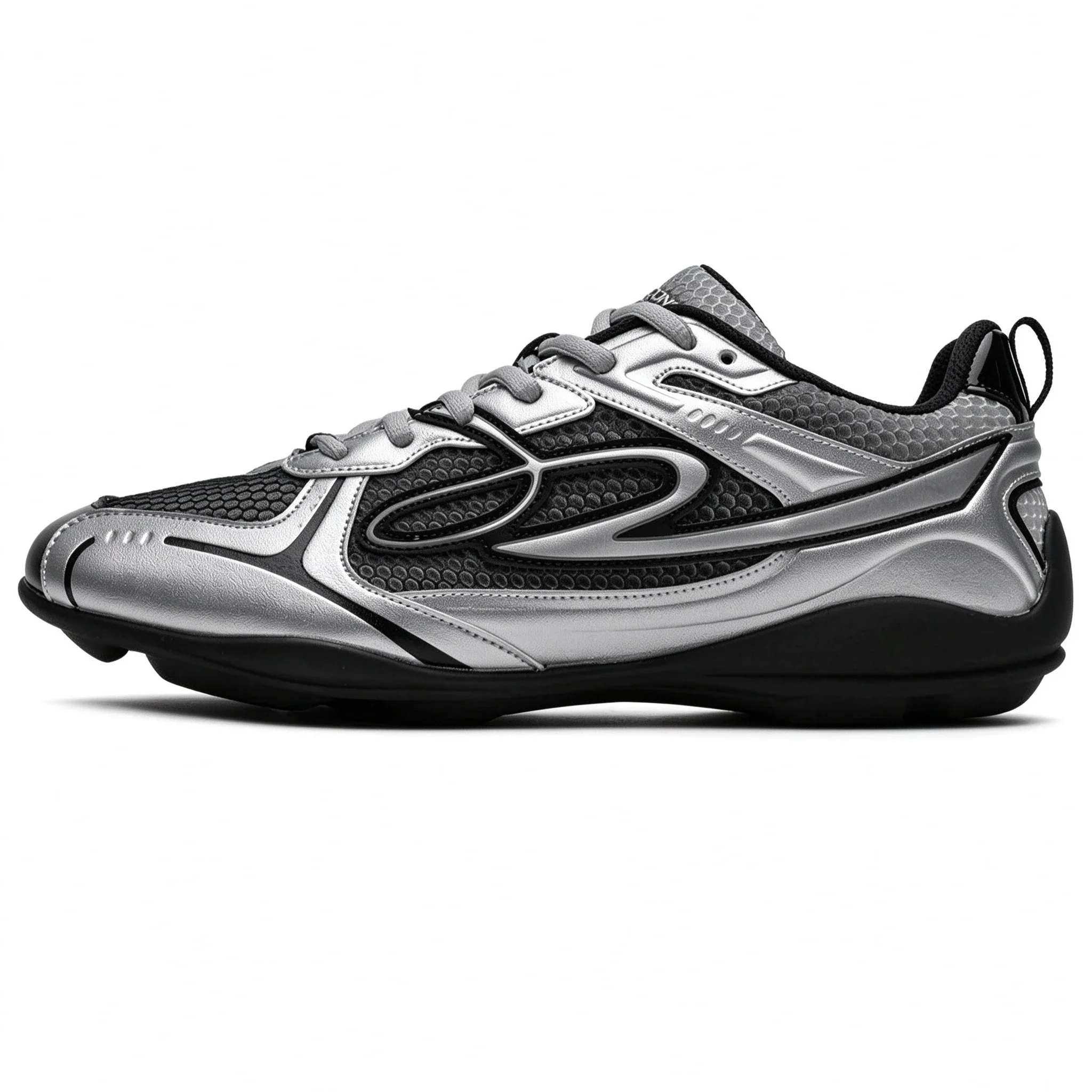
Recommended styles for this topic
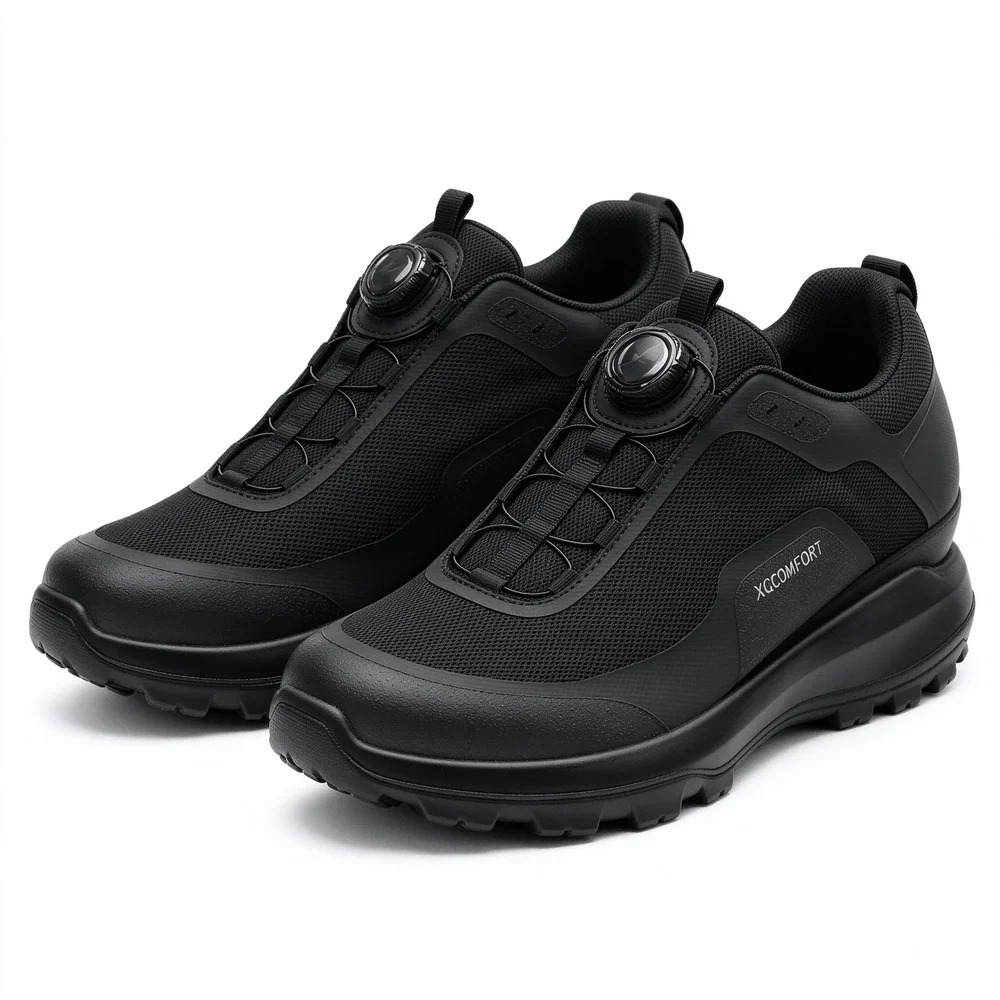
- 7 cm Height-Increasing Shoes | Men's Casual Sports | Breathable Cloth Height-Increasing Casual Shoes — Full specs, size chart and product photos
- 6 cm Height-Increasing Shoes | Retro GAT Shoes | Unisex Breathable Baseball Sneakers — Full specs, size chart and product photos
- 8 cm Height-Increasing Shoes | Women's Everyday | Hidden Lift Platform White Sneakers — Full specs, size chart and product photos
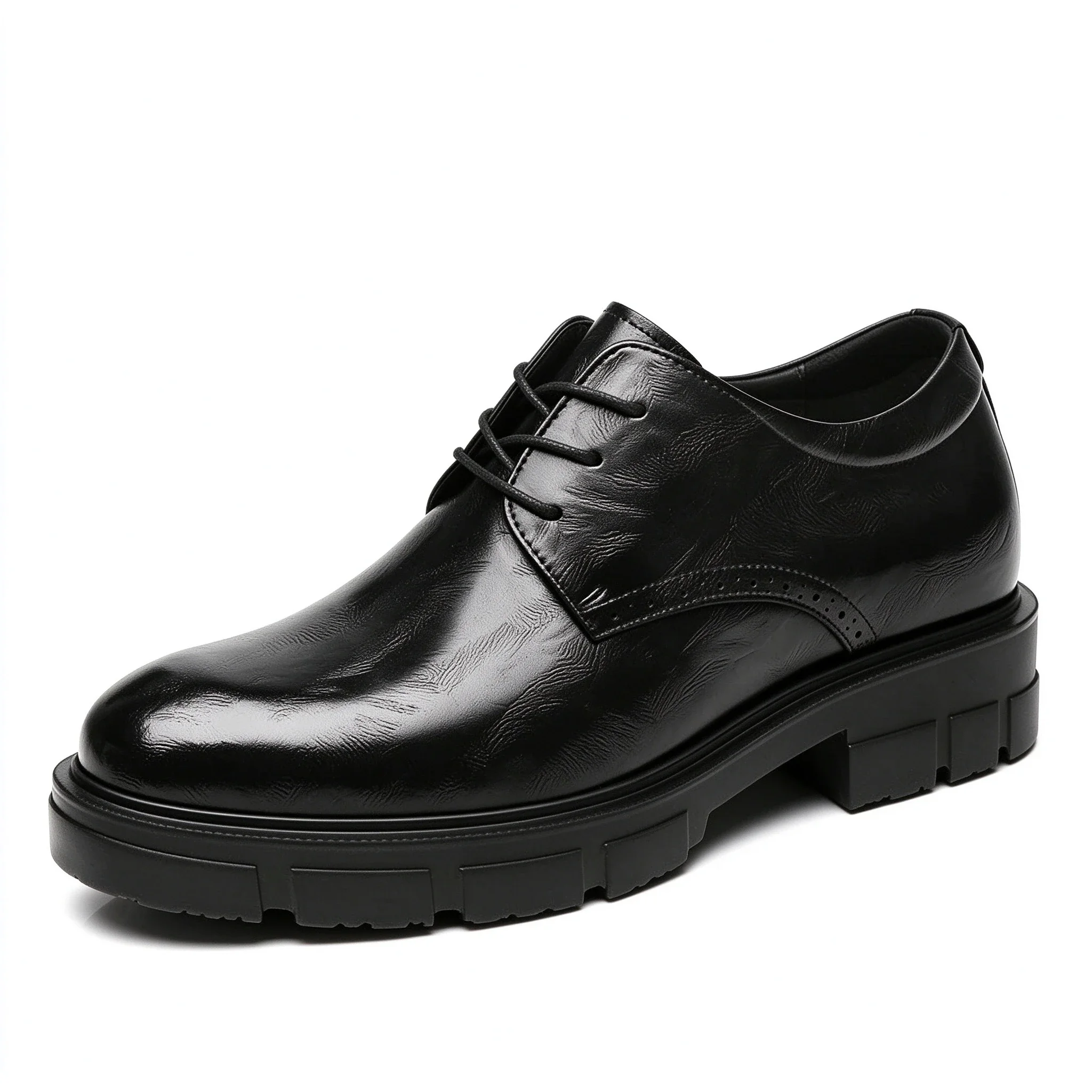
- 10 cm Height-Increasing Shoes | Men's Formal | British Platform Genuine Leather Groom Wedding Shoes — Full specs, size chart and product photos
Further reading
- Do height-increasing shoes hurt your feet? Starting from foot structure — Foot structure and comfort when wearing height-increasing shoes
- Size and Last Guide — Size charts, how to measure your feet and fit notes by style
Still deciding? Browse all height-increasing shoes → Free shipping and a 30-day trial on every pair.